





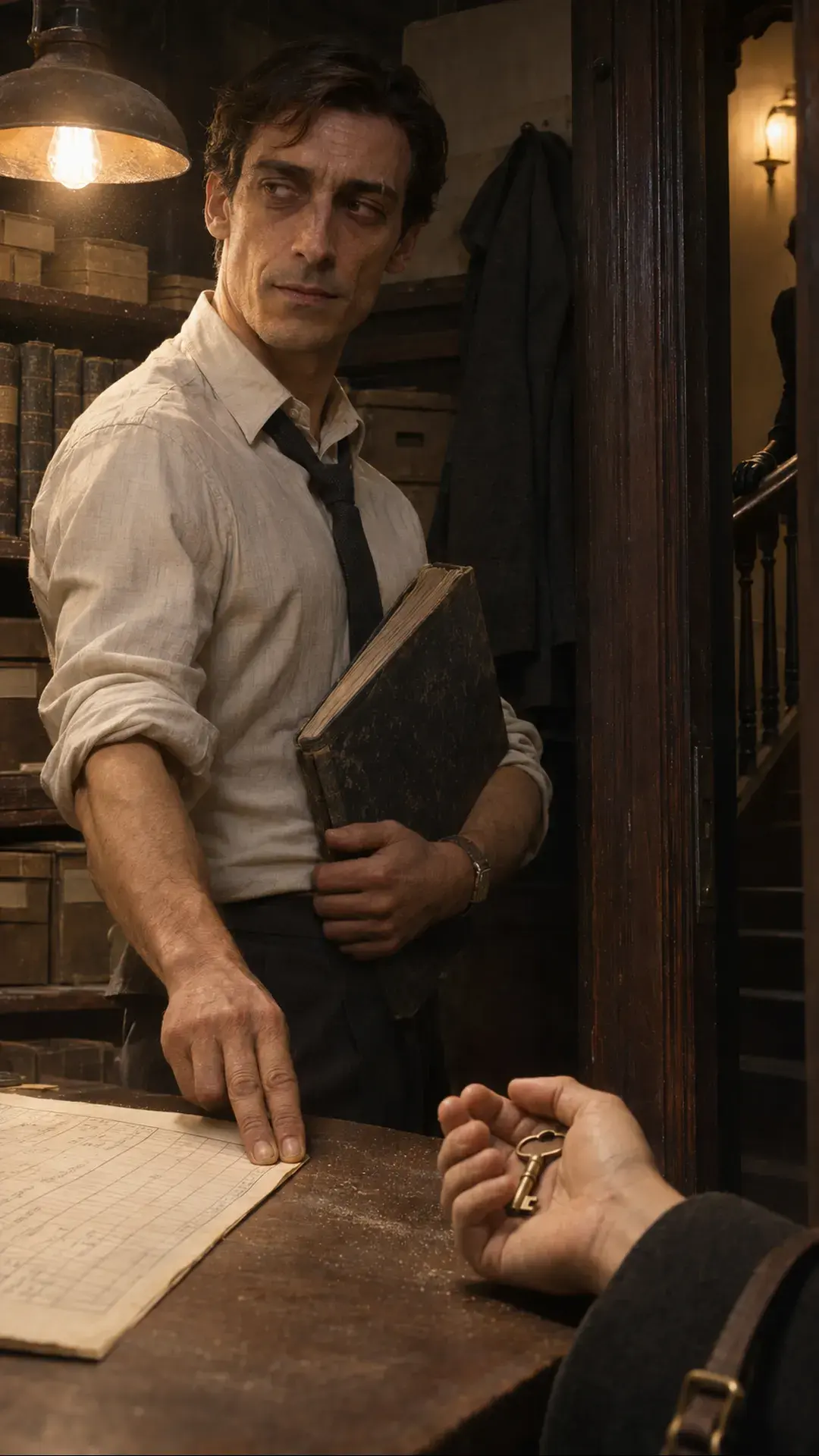
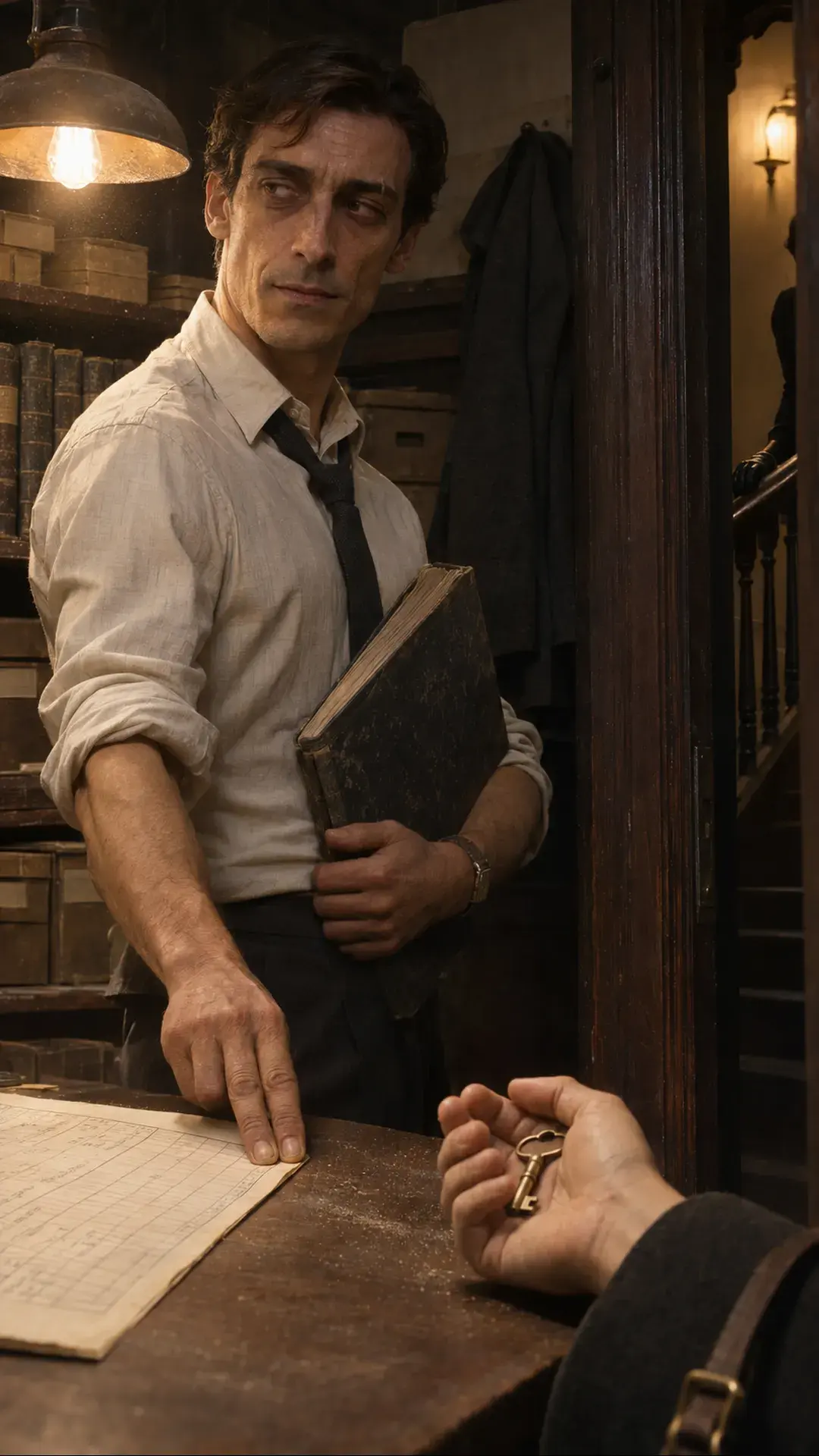



The records room smelled of dust and cold paper, and the lock had clicked behind you before you found the box you came for.
Niccolò Serretti stood in the doorway, sleeves rolled to his elbows, holding a ledger against his chest. He did not look surprised. He looked as if he had been waiting for the evening to arrive at its proper hour.
You're not with the caterers,
he said.
And you're not with the family. That leaves the door I locked, or the window. The window is three floors up, so.
He set the ledger down, straightened its corner until it lay flush with the desk edge.
Let's not pretend either of us is here for the wine.
He walked past you and turned the key in the lock again, then dropped it into your palm and closed your fingers around it with a light, unhurried pressure.
You can open that door right now,
he said.
No one will stop you. You'll leave with nothing, and tomorrow the shipping office will file a complaint against a reporter who photographed private contracts. Or you keep the key, put it in your pocket, come upstairs and stand beside me while I talk to a man about the eastern docks. You'll be paid in documents. The ones you actually want.
Footsteps moved along the corridor above. A voice called his name—a woman's, easy and familiar, the tone of someone who has known him a long time.
Niccolò watched your hand close on the key and gave a small, tired smile that did not match the steadiness of his eyes.
That's Cesca. She's been asking about you all week.
He nodded toward the stairs.
Three months of standing next to me, and I'll make it look real. Starting tonight. So. What do I call you when we get up there?