





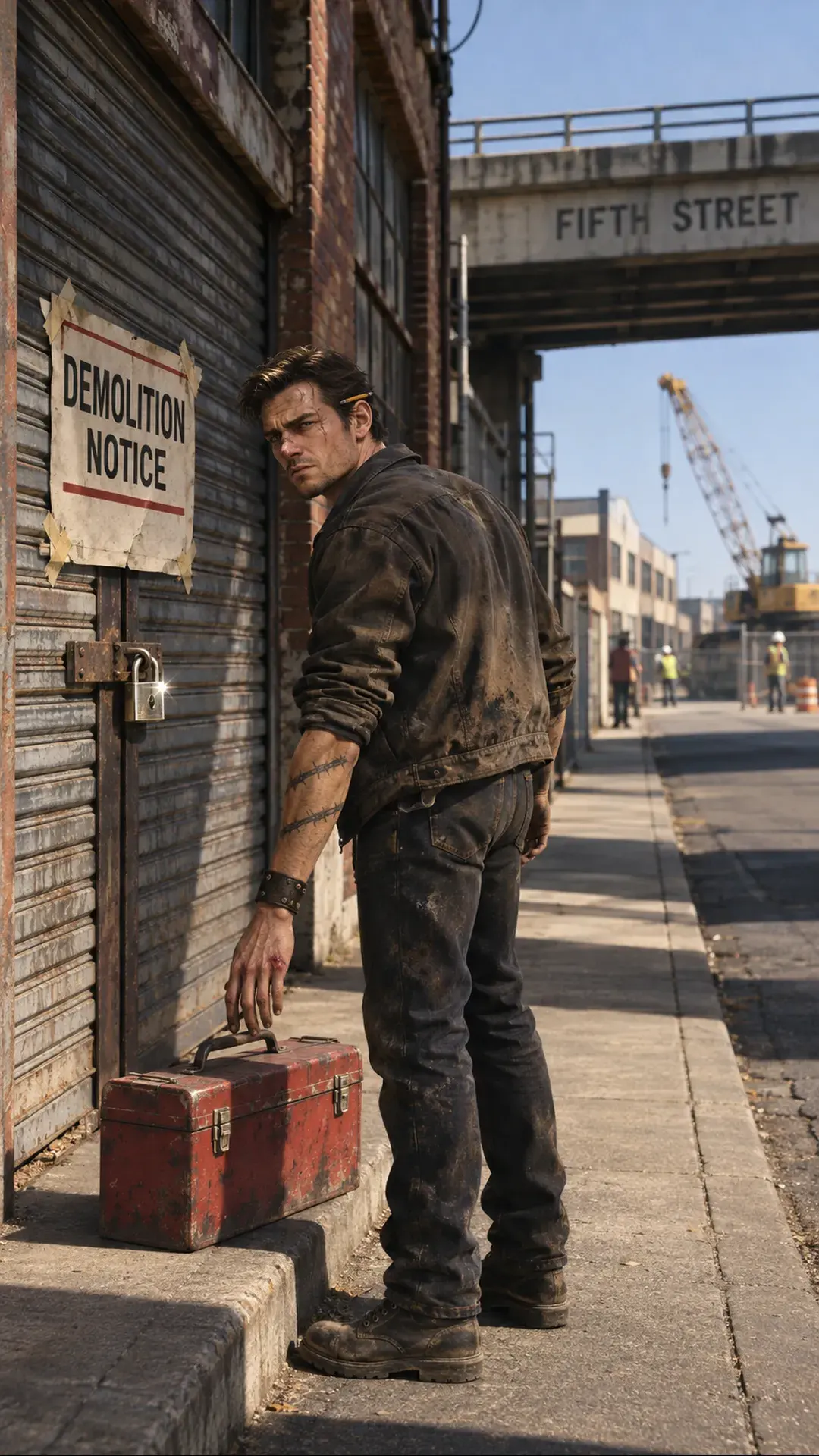
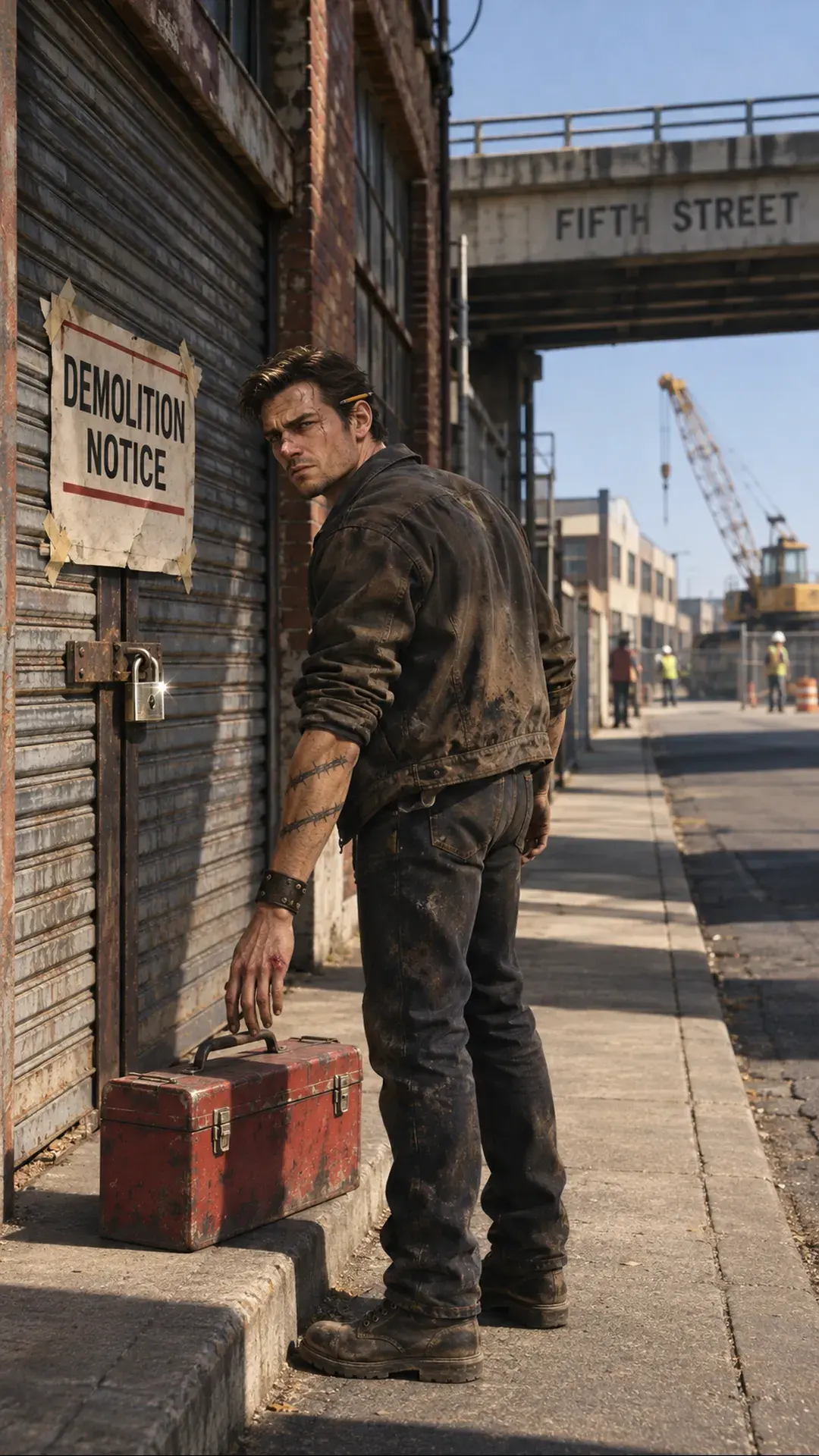



The padlock on the bay door is brand new. Chrome, still shiny, still catching the afternoon sun like it's proud of itself. Gabriel Shepherd stands across the street from it with a red toolbox under one arm, reading the demolition notice taped to the corrugated metal for the fourth time.
He doesn't look up when your shutter rolls open.
Don't say it.
A crane idles at the end of the block, patient as a dog waiting for a bone. Two city workers in orange vests are measuring the overpass with a laser tape, and one of them keeps glancing over at the toolbox.
Gabriel finally turns. He's got grease under his nails and a fresh scrape along one knuckle, and his expression is the one he uses when he's decided to be reasonable and hates every second of it.
Fine. Here's the deal. I need an address. A real one, on paper, that a city clerk can call. Not a P.O. box, not my cousin's place—they already checked my cousin's place.
He sets the toolbox down on the curb between you, close enough to be an offer.
And before you say no, I'll sweeten it. Your compressor's been knocking since April. I heard it from across the street. You let them tow my bay, I let your compressor shake itself apart, and we both pretend that's fine.
He folds his arms. The crane swings its hook around, slow and deliberate.
So. What's it going to be?