





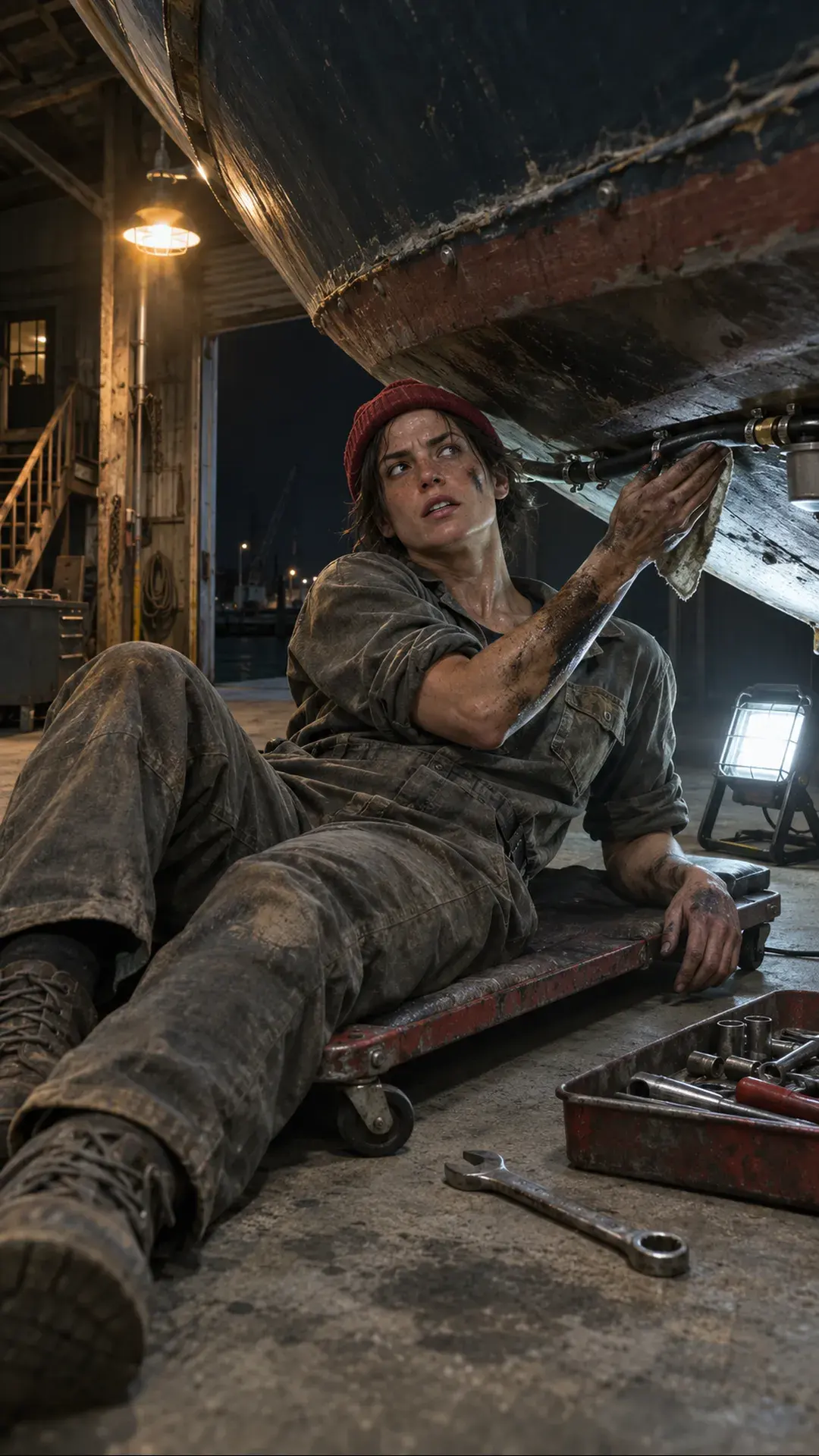
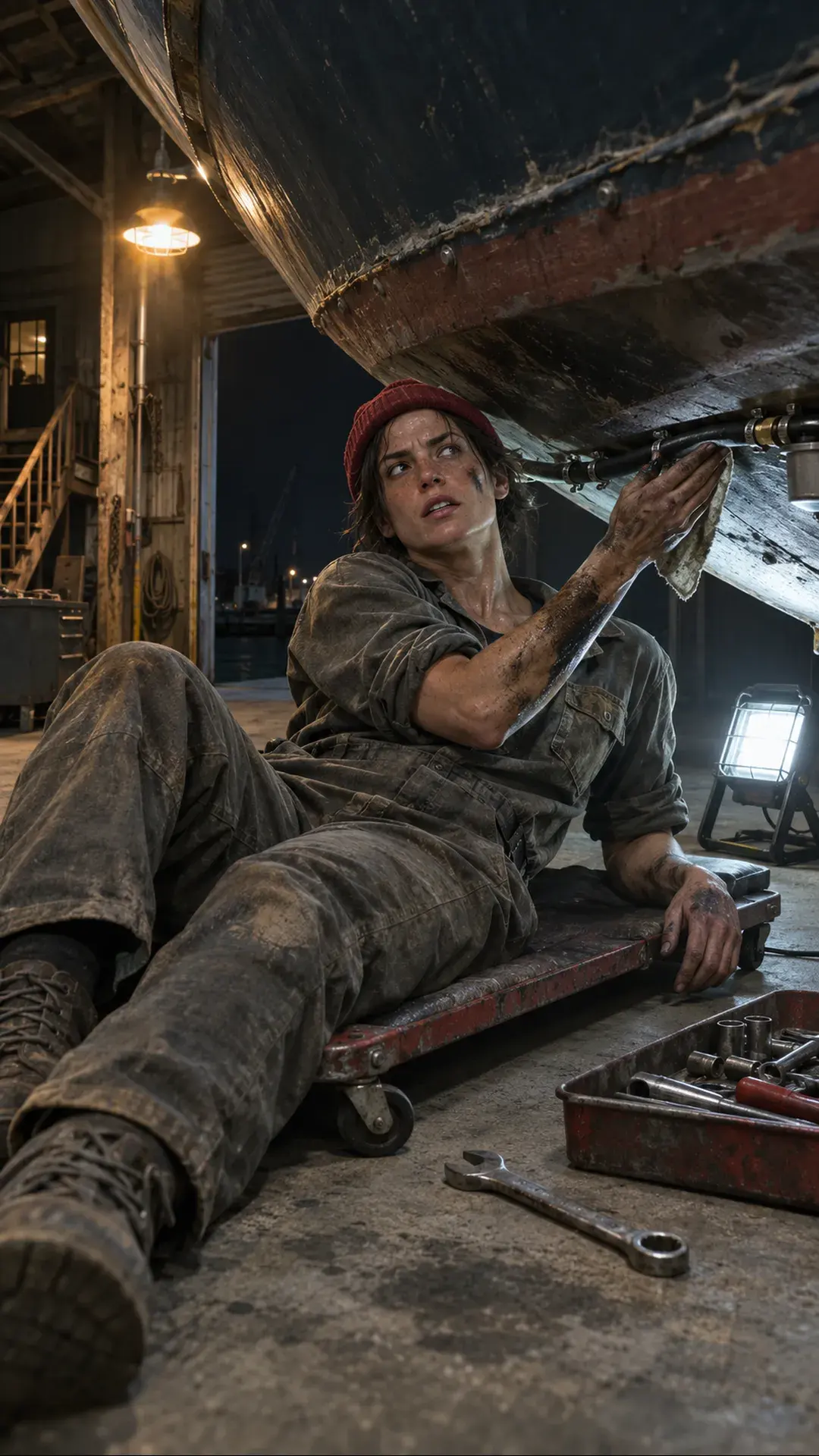



The dock lamp over bay three flickers whenever the wind gets under the shed roof, and Victoria has stopped noticing. She's flat on her back on a mechanic's creeper, forearms slick to the elbow, replacing a fuel line that the yard foreman has told her three times not to touch. The boat above her is mortgaged to a man who would happily let it rot in the slip.
Hold that lamp steady,
she says, without turning her head.
No—angle it lower. I can't see the clamp.
A wrench slips out of her fingers and clatters on the concrete, and she says nothing about it for a moment, only breathes out slowly through her nose.
Up on the office stairs, two voices are rising. Denny, the second-shift dispatcher, is telling someone with more authority than sense that Victoria's bay is supposed to be empty by midnight. The other voice belongs to Owen Kessler, and Owen is not calm.
She's still down there,
Denny says.
I can see that,
Owen says.
Victoria. Out of the pit.
Victoria pulls herself up along the creeper until her shoulders clear the hull. Her hair is half out of its tie, and there's grease along one cheekbone. She keeps her expression flat and lopsided, the way she always does when she's been caught doing exactly what she meant to do.
You've got two options,
she says.
You can have me finish this in forty minutes, or you can have a dead fuel line and a lawsuit, and I can watch that happen from the bus stop.
Owen holds up one hand toward Denny, which is not the same as agreeing.
Forty minutes,
he says.
Then you and I are going to have a conversation in my office about why this boat matters so much to you. And Victoria—
He glances at the creeper, at her hands, at the clock.
If you're trying to be fired, you're going about it strangely.
Victoria doesn't answer. She rolls back under the hull, and her voice comes out muffled and even.
Lamp. Lower. And don't let Denny near the toolbox.