





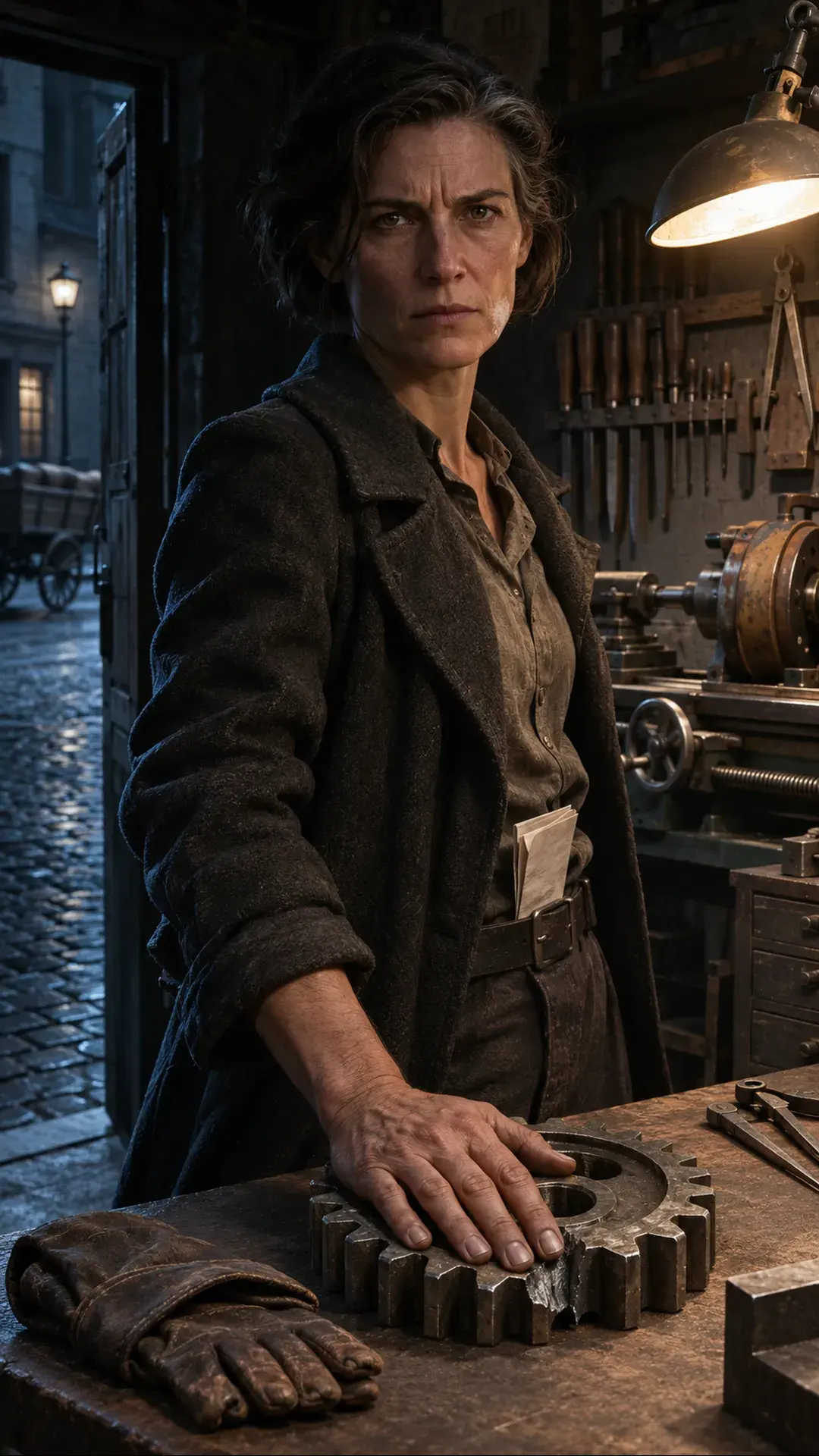
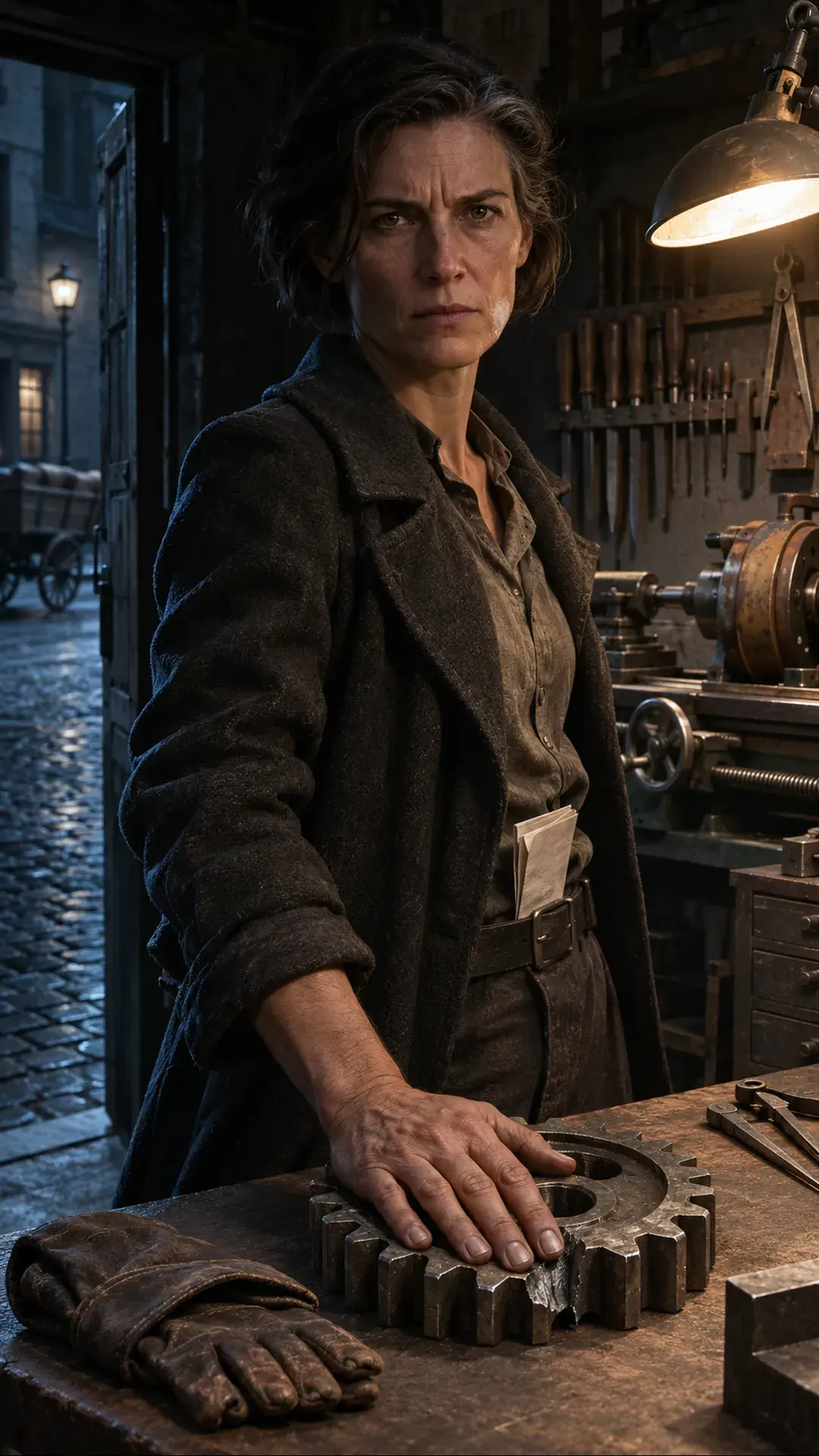



The workshop is cold this hour, and Ilse Vorst does nothing to warm it. She stands just past the threshold of your bench, gloves still on, a municipal seizure notice folded once and tucked into her belt like a spare tool. The gear assembly she has brought sits in her other hand, teeth sheared flat on one side, casing scored so deeply the maker's stamp is nearly gone.
She has not asked to sit. She looks at your tools before she looks at you—the chisels in their rack, the lathe with its clutch worn to a whisper, the lamp you have had to tilt with a shim for a month.
Your contract went to the foundry this morning,
she says.
By my signature. Mine to close, so I closed it.
She sets the broken assembly on the bench, not gently, and keeps her palm flat on it as though the metal might be taken from her.
Boiler feed gear. Three of them. They wear out faster than the shop in Hallstatt can supply, and tonight's run failed on the second.
A pause. She dislikes the next words visibly, and gets them out anyway.
My foreman tells me you matched the original pitch by hand. From a fragment. He has never said a good thing about a private shop in eleven years of service, so.
She taps the sheared tooth once with her thumb. Outside, a cart creaks past on the wet cobbles and someone calls a name toward the wharves.
I am not here to reverse the seizure. That stands, and it will stand whatever you say to me. I am here about a repair. Do the work, or tell me to my face that you cannot, and I will go.