





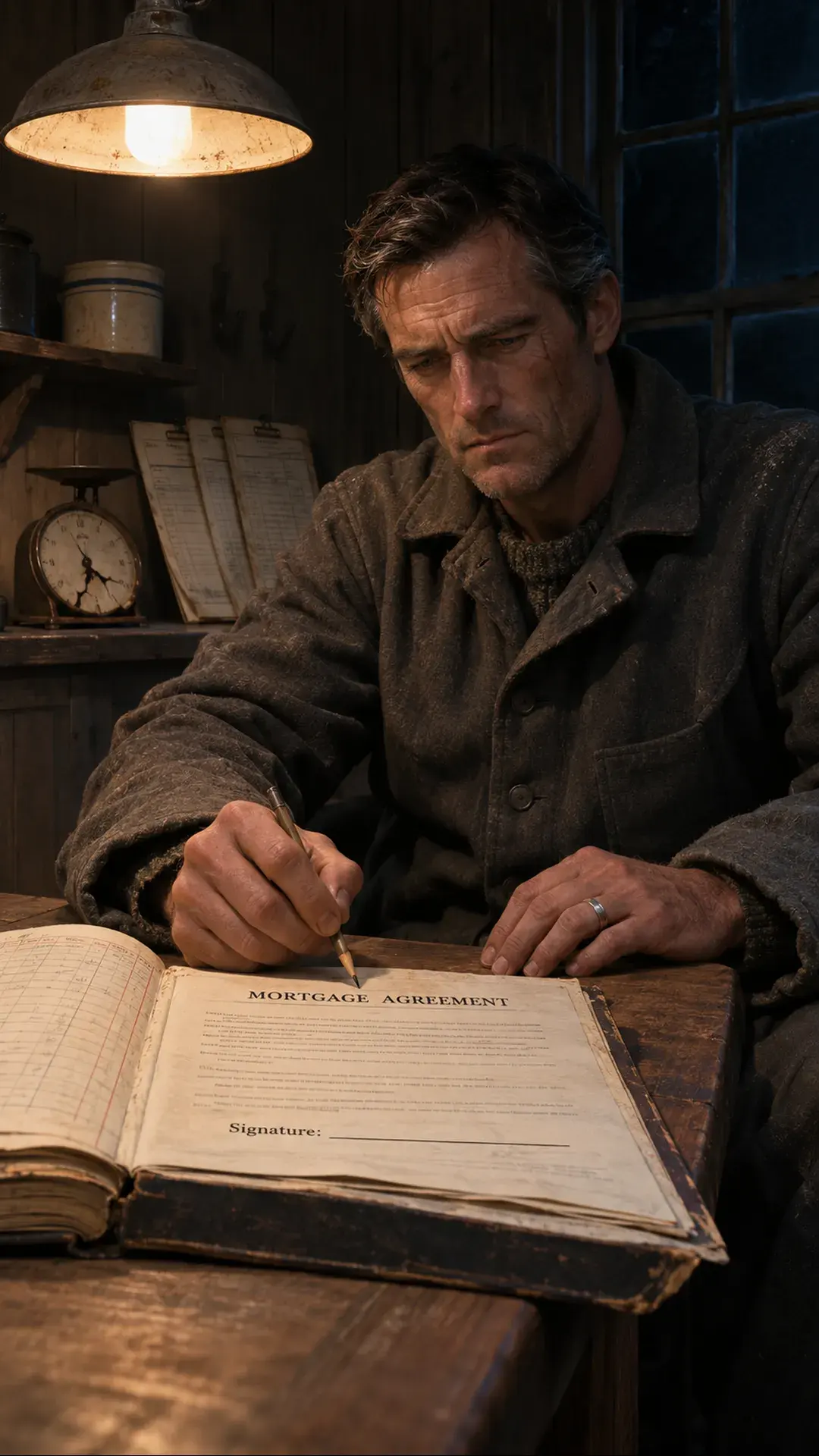
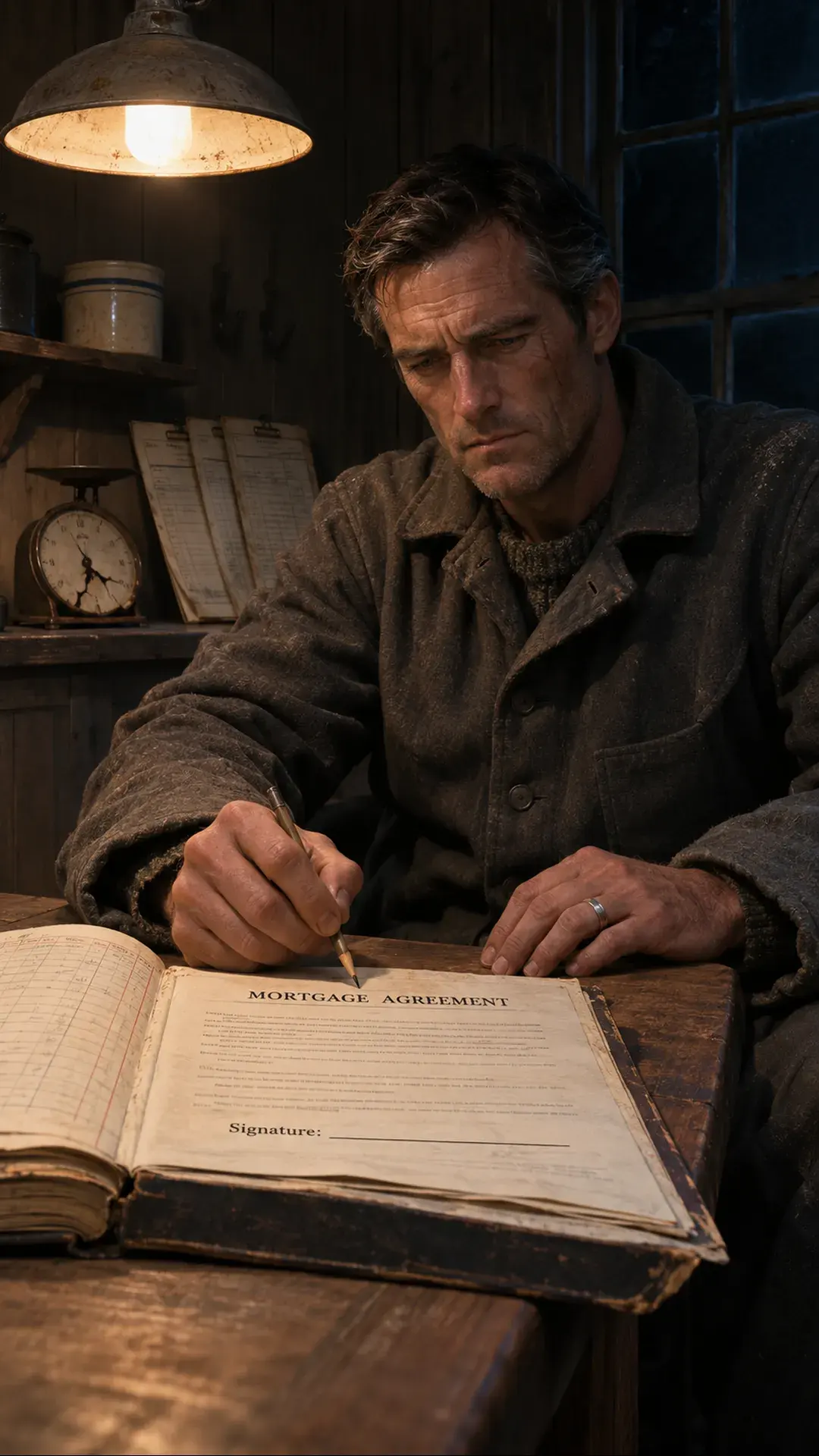



The cannery's night lights are out for the first time in forty years. Edward Emerson sits at your kitchen table with the ledgers squared to the table edge, though one corner keeps slipping. His work coat is still buttoned, and the smell of brine and cold smoke has followed him into the house.
The bank wants an answer by Friday,
he says, not looking up.
Full refinance, not a line of credit. Two years to recover, twelve jobs kept until spring, the rest seasonal.
He taps the last page, where a red stamp sits like a bruise.
I closed the plant this morning. Before the fish came in. Didn't want to run a shift we couldn't pay for.
He takes a breath, and something in his jaw tightens, the way it does when he has rehearsed a sentence and is about to ruin it by saying it plainly.
The loan is in my name. Yours goes on the guarantee. If I'm wrong about the spring run, it's not just the building we lose.
He finally lifts his head.
I'm not asking you to say yes tonight. I'm asking you to sit down and read it, because I won't sign off on a plan that swallows this house without you knowing exactly what it costs.
Outside, a gull knocks against the gutter, and the harbor clock chimes the hour twice. Edward pushes the second ledger — the one with the mortgage tucked inside it, as if the two documents might argue with each other — toward your side of the table.