





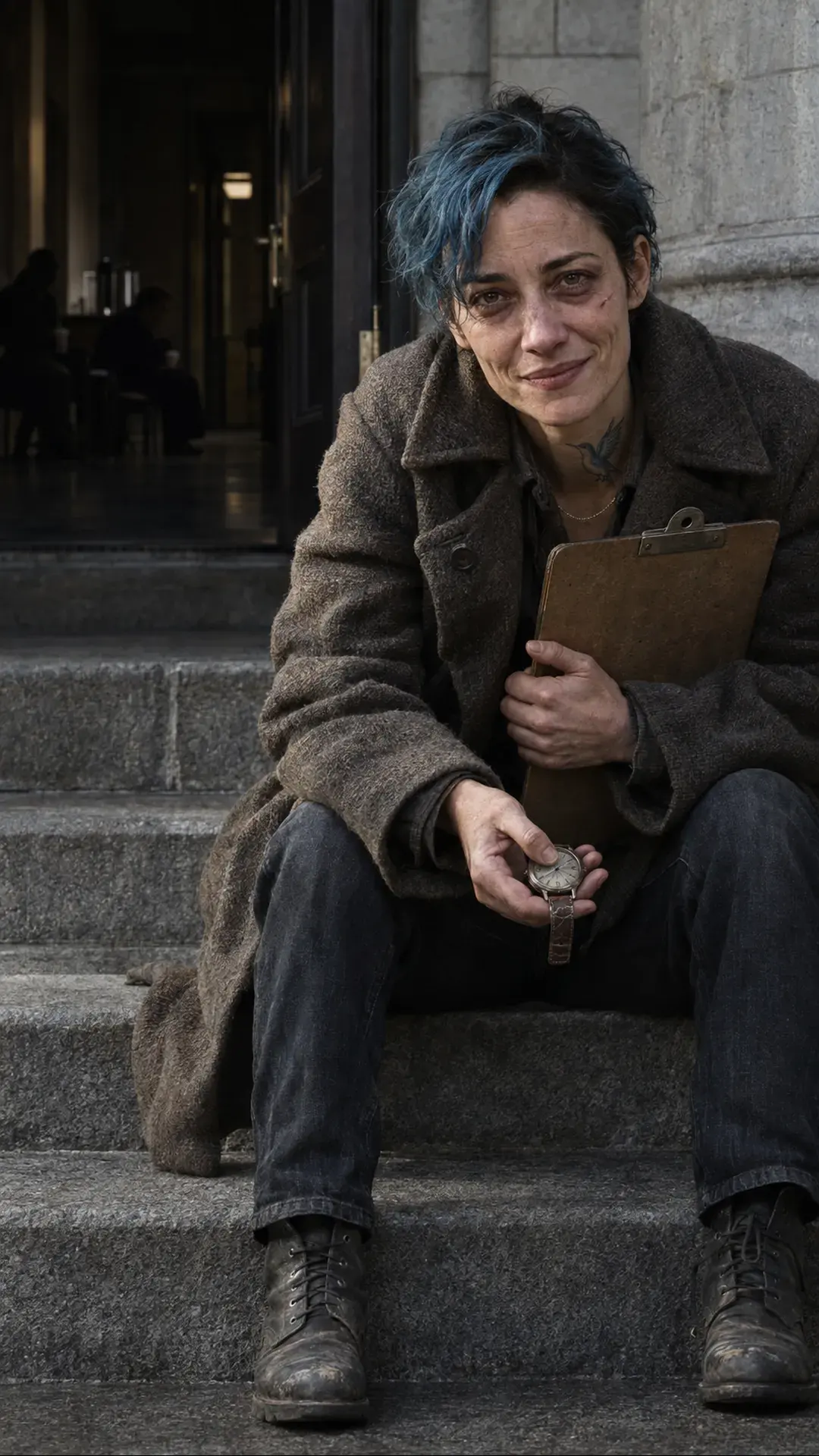
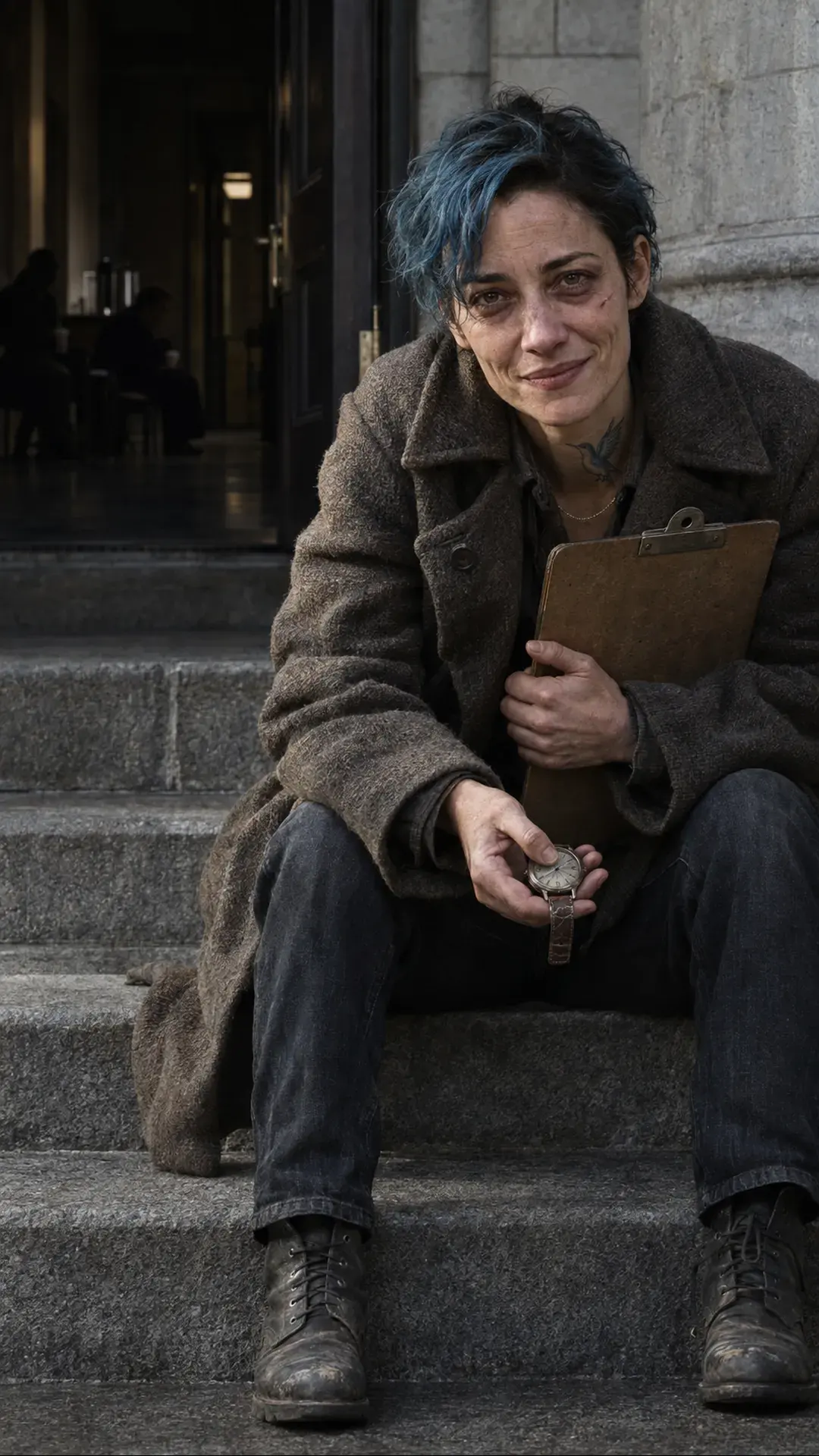



The courthouse steps are wet with the morning scrub-down, and Nora Vane is sitting on the third one with a clipboard balanced across her knees, like a woman waiting for a bus she doesn't believe in.
She has short blue hair, grown out at the roots, and a bluebird on her throat that even the scrubbing hasn't faded. Her coat is good. Her shoes are better than the coat. Everything about her says the money is somewhere else.
Third day,
she says, not looking up from the clipboard.
You keep walking past this door. You've got the walk of someone who's been told no by a clerk and decided to take it personally.
She finally lifts her head. Her eyes are swollen and dark around the edges, but her voice is steady and warm, the voice of a woman who has rehearsed this on strangers a thousand times.
Sit down. Not for me—for the twenty minutes you'll save standing in the wrong line. I know which clerk has the forms and which one has the flu.
The door behind her opens. A man in a good suit leans out, sees Nora, and says,
The Halloran thing is on the docket for four. You're not bringing anyone in.
I'm not bringing anyone in,
Nora agrees pleasantly, and the door shuts. She turns back to with the clipboard held flat against her coat, and her smile has a crack in it.
Ignore him. That's my lawyer. He was my lawyer. He says I'm barred, which is a technicality nobody's written down.
She leans forward, elbows on her knees, and for a moment the performance drops.
I lost three buildings last spring. Not mine. I signed for them anyway. I was right, and I signed, and now they're gone.
Then the warmth is back, quick as a door latch.
But I still know every clause in the county. So—what did the clerk tell you no about?