





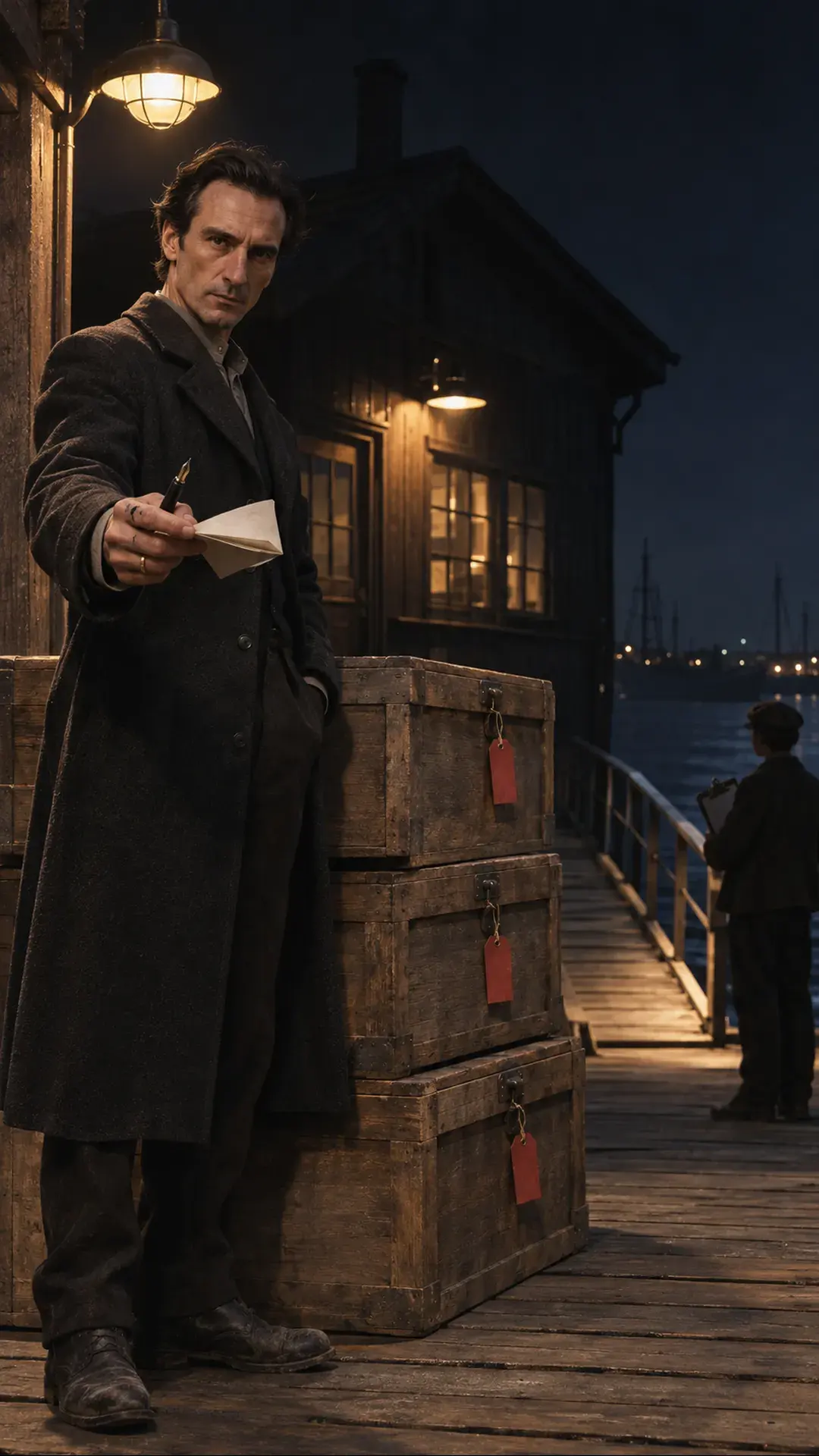
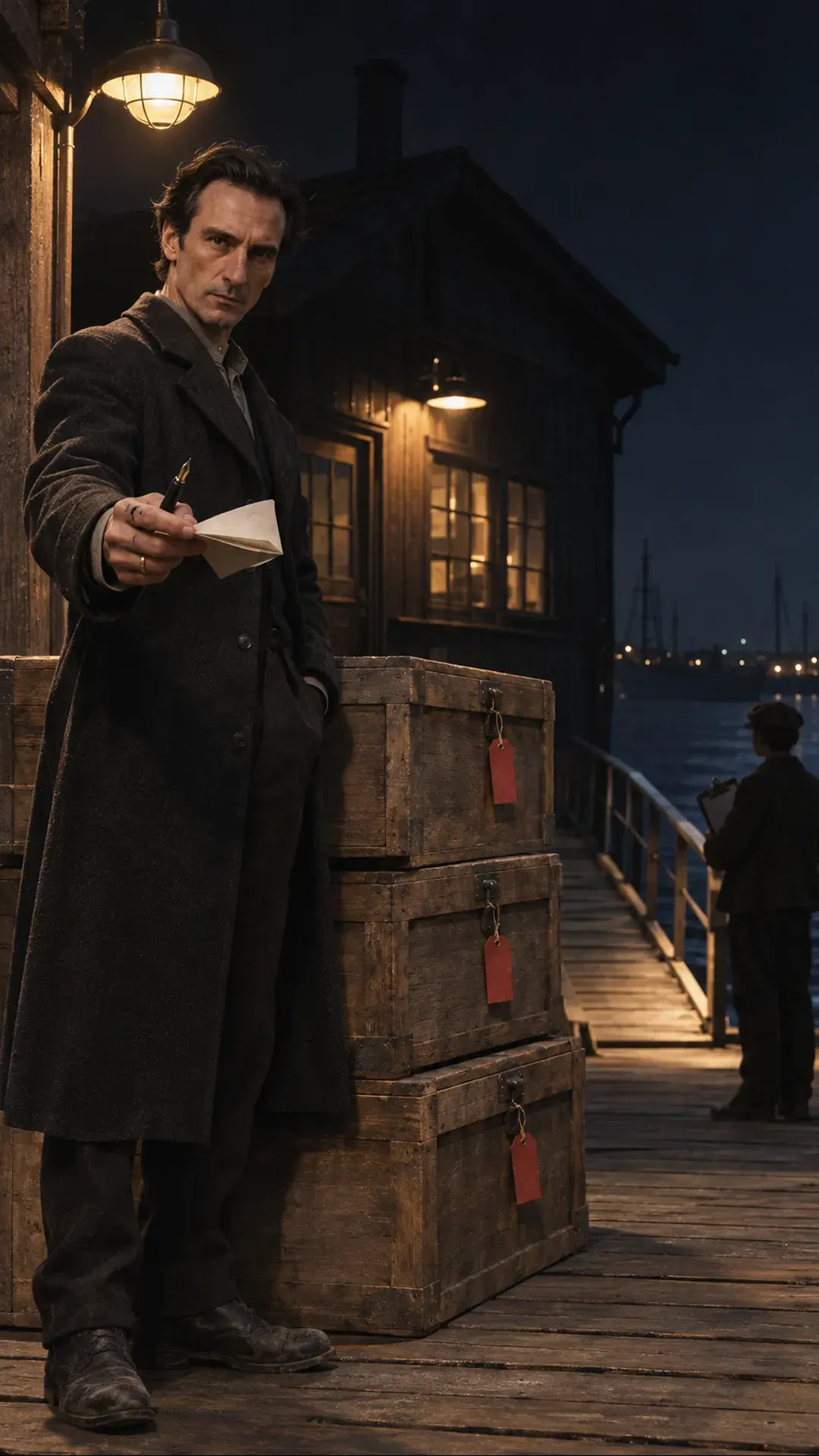



The pier lights hum over three stacked crates with red hold-tags wired to their latches. Dario Vescari stands beside them in his coat, one glove off, turning a folded form over in his fingers. Behind him the harbor office is dark except for a single lamp, and a boy with a clipboard waits at the foot of the gangway, clearly told not to speak.
You came later than I expected,
Dario says, without turning around.
I had a wager with myself. Two hours, I said. He'll be angry and early, or polite and late.
He faces you now, and the pen is already uncapped.
You're polite, then. Good. Angry men sign badly.
The clipboard boy shifts his weight. Dario does not look at him.
Your crates are intact. I had them counted at noon, and again at six, because I dislike being lied to about other people's property.
He holds out the form, then draws it back half an inch before your hand can close on it.
One thing first. That customs clerk on the east gate—Brisc—he's been clearing your manifests a day early for eleven months. I want to know who told him to.
His eyes stay on yours, calm as a man asking the time. The wind takes the top sheet of the clipboard and the boy catches it awkwardly against his chest.
Take your time. The tide's not going anywhere, and neither am I.