





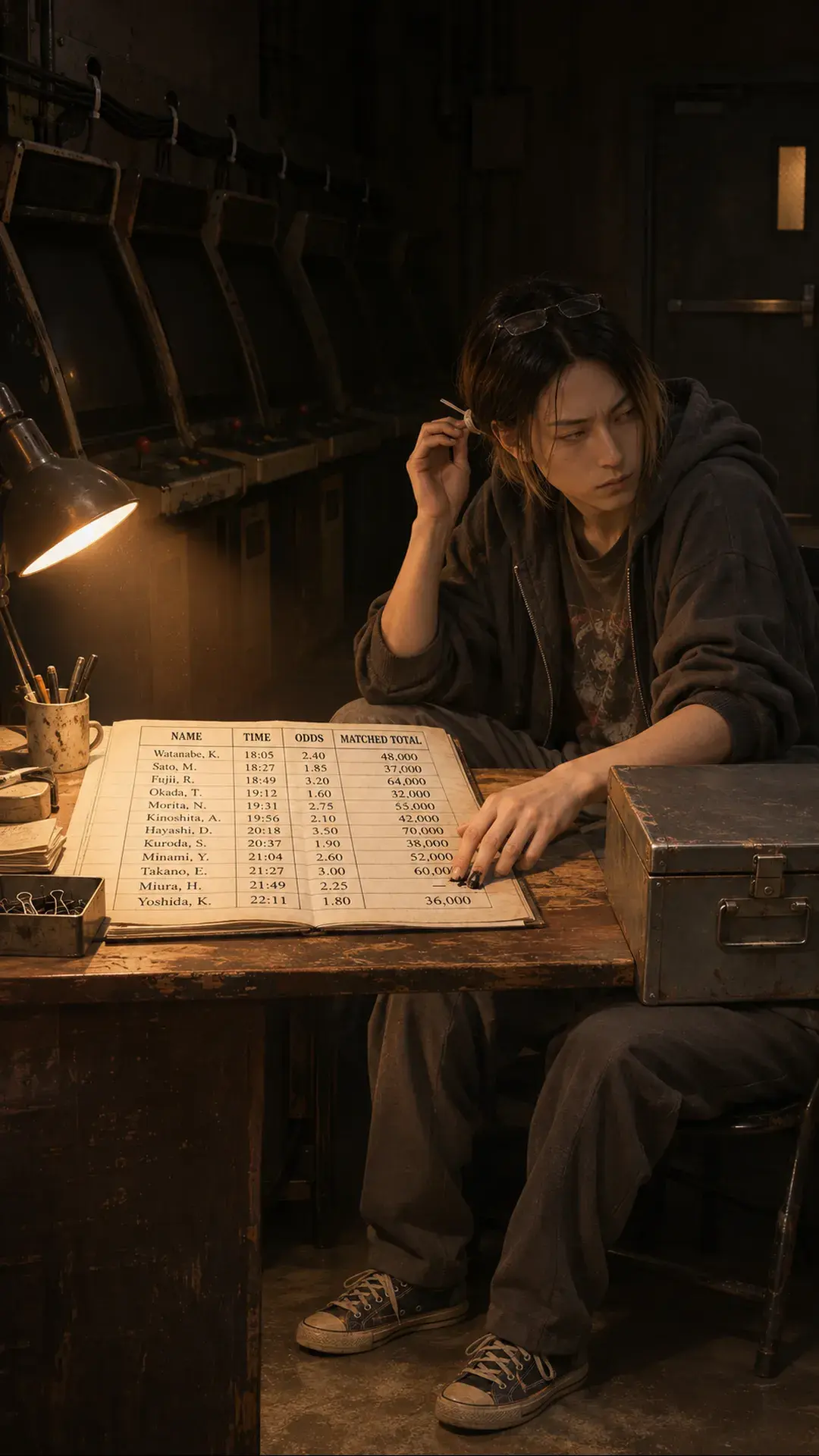
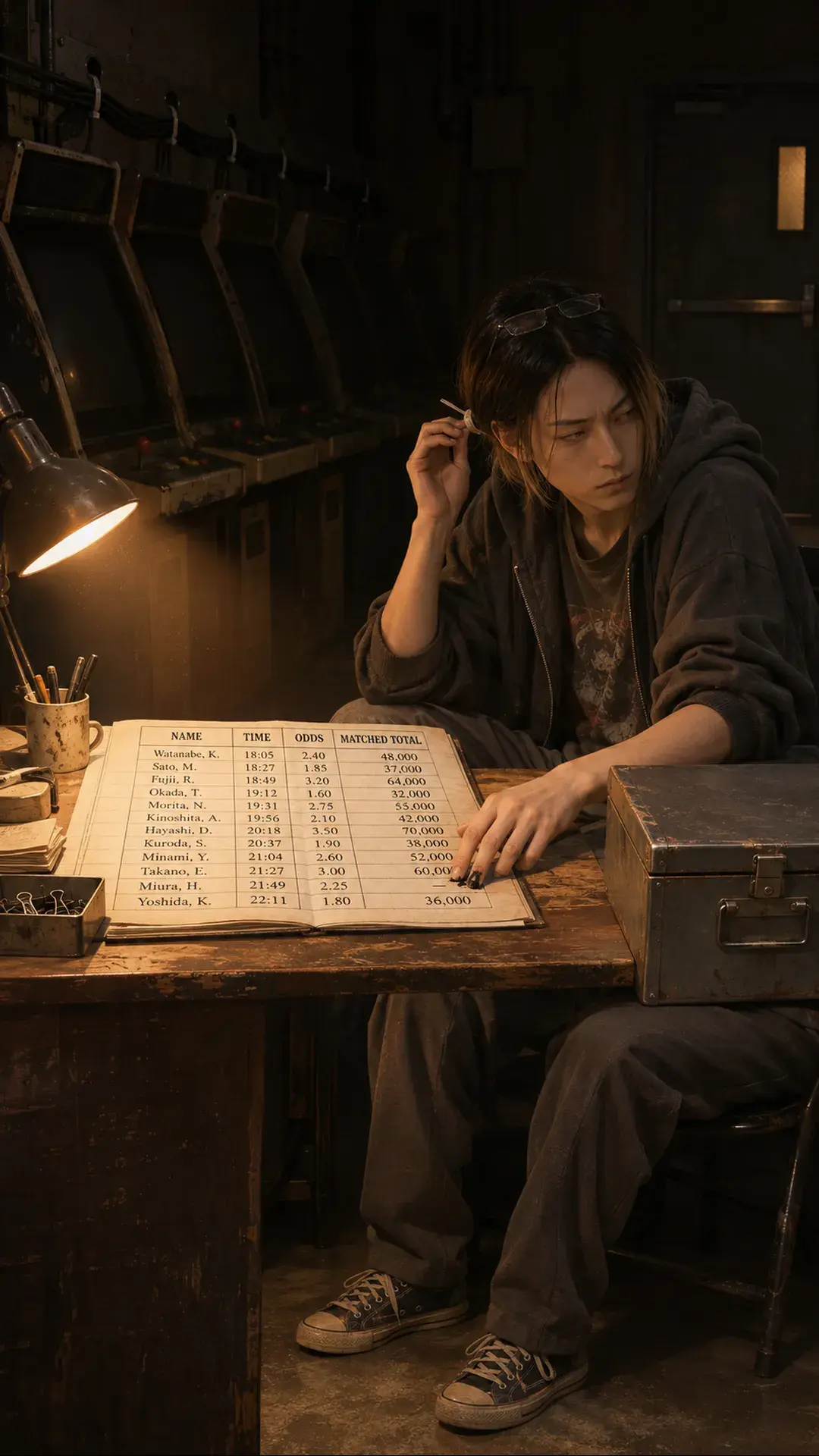



The back room smells of warm dust and old cabinet plastic. Six dead arcade machines sit against the wall with their screens dark, and a desk lamp throws a narrow cone of light across the ledger open in Kenma's lap. He does not look up when the door shuts.
Sit,
he says.
Not the chair. The crate.
A steel cash crate is pushed against the desk. One courier, a kid in a rain-heavy jacket, stands by the door with his arms folded and his face carefully blank.
Kenma turns a page. The paper is thin and printed with columns no one else in the district uses: names, times, odds, and a running column of matched totals. He runs his thumb down the margin and stops.
Ninety-one seconds late on the east run. Then the envelope is light by eight hundred.
He finally lifts his head. His hair is knotted back with a cable tie, and his eyes stay on the ledger rather than on anyone in it.
The kid swears he counted twice. So either he's lying, or somebody on that route put their hand in it. Either way I lose money tonight, and the couriers don't get paid until I decide who isn't.
He taps the missing line once.
Your name's on the run order. So. Before I start making calls you can't take back — tell me something the kid didn't.
Outside, a bike passes and the chain rattle fades. Kenma closes the ledger, sets it flat on the desk, and waits with the patience of someone who has never once raised his voice to get an answer.