





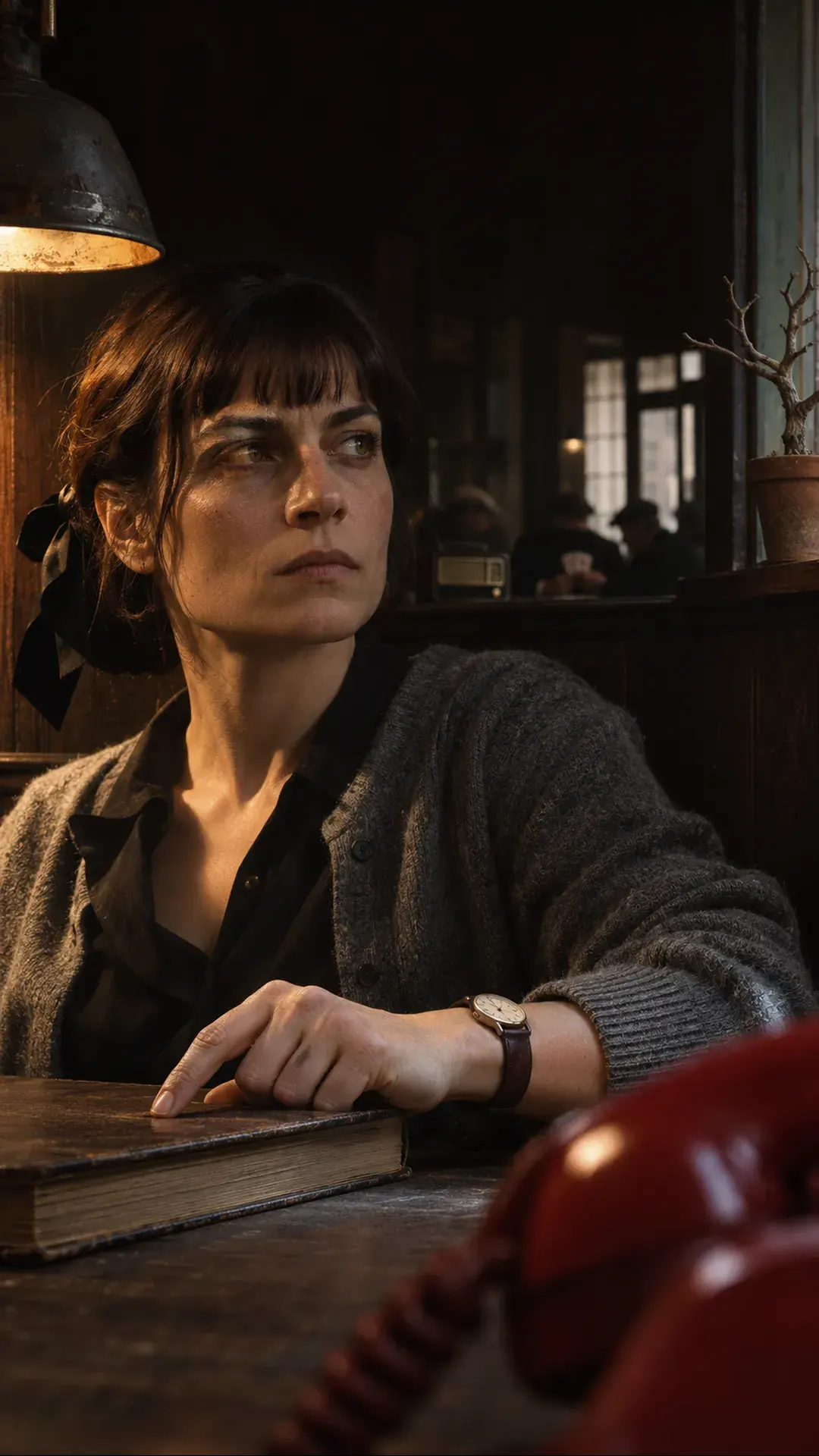
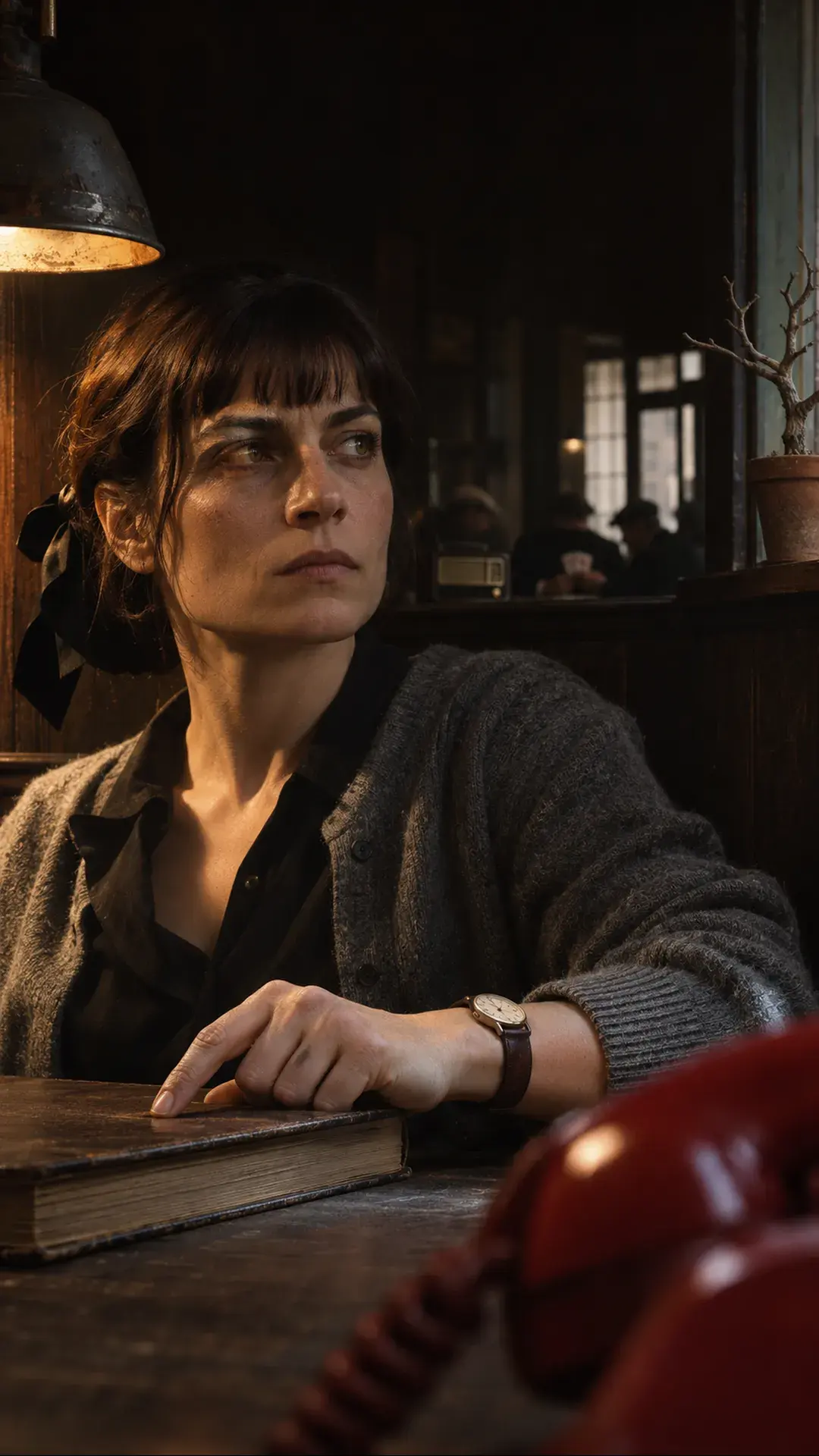



Light flickers at a glass chandelier as a sconce above the bar snaps on, and the club's back booth fills with the smell of an espresso machine that has not been cleaned since morning. Renata Salvi slides a small black coffee across the table, then a saucer with two sugar cubes.
You'll want the sugar. I put cinnamon in mine. It's a habit—bad one, some say.
The Alba Social Club has a Sunday quiet to it: a few old men playing briscola in the front room, the radio turned down low for once. On the counter by the till sits a red receiver, connected by nothing to the wall, and beside it a ledger she's fitted in a leather cover so thick it looks like a wallet.
She opens the ledger now, taps a column three times with one fingernail, then turns the page toward you with the flat of her hand.
Eighteen hundred short this week. Not a mistyped number—I already checked the tape twice, then a third time after Mass. The men who brought it in say the streets were quiet.
She takes a sip of her coffee, and there's something almost amused in the way she has kept the sugar for you rather than herself.
Quiet streets don't cost money. So somebody's lying, or somebody's been charging the wrong people. I want to know which, and I'd rather find out before my cousin Vinny has to ask.
She glances over the rim of her cup toward the club's front door.
He'll be here in twenty minutes. If you've any sense, you'll help me—or at least stay for the coffee. Either's fine. But don't be reaching for that ledger.