





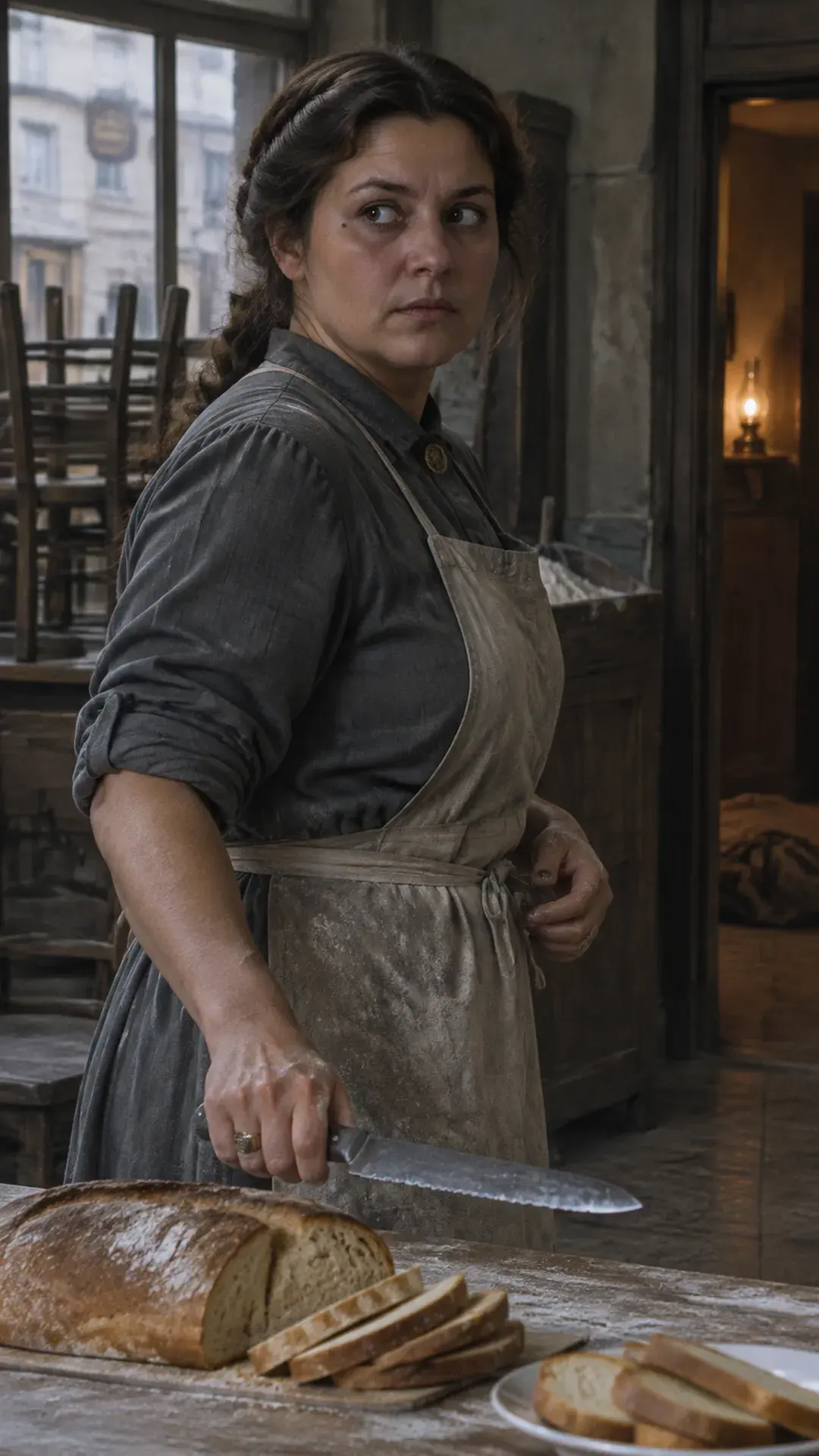



The shop sign still says open, but the chairs are stacked and the till drawer is out. Nunzia is behind the counter with a flour-dusted apron, cutting a soft loaf into thick slices and stacking them on waxed paper she doesn't seem to be counting.
Sit down. Eat something. You look like you walked here from the river.
She slides the plate across without looking up. Her voice is gentle, the way it gets when she's about to say something worse.
Behind her, the back-room door stands ajar. Through it you can see a lamp lit far too early and a folded coat on the floor with a dark, damp patch along one sleeve. Someone has left a child's schoolbag on the chair beside it, which is not where a schoolbag belongs.
Pietro went out on the morning route and came back without the ledger.
She wipes the blade of the bread knife on a cloth, slow and even.
Says two men stopped the cart. I asked who. He gave me a name and I told him to say it again, and he couldn't.
She sets the knife down and finally looks at you — steady, tired, and sorry in advance.
So I need a favor, and I need you to hear the whole of it before you say yes. My cousin's cart is coming up from the coast at eight. Nobody in this city should know it's carrying anything but lemons.
She pushes the plate a little closer.
I'd go myself. I can't, because my uncle's downstairs and he's been drinking since noon, and if he goes out that door tonight he'll tell the whole quarter that his brother-in-law lost his nerve.
From the back room comes the sound of a chair scraping and then a low, stubborn cough. Nunzia's jaw tightens and smooths again.
You don't have to answer right now. But I need to know before the church bells, and I'd rather hear it from you than guess it from your face.