





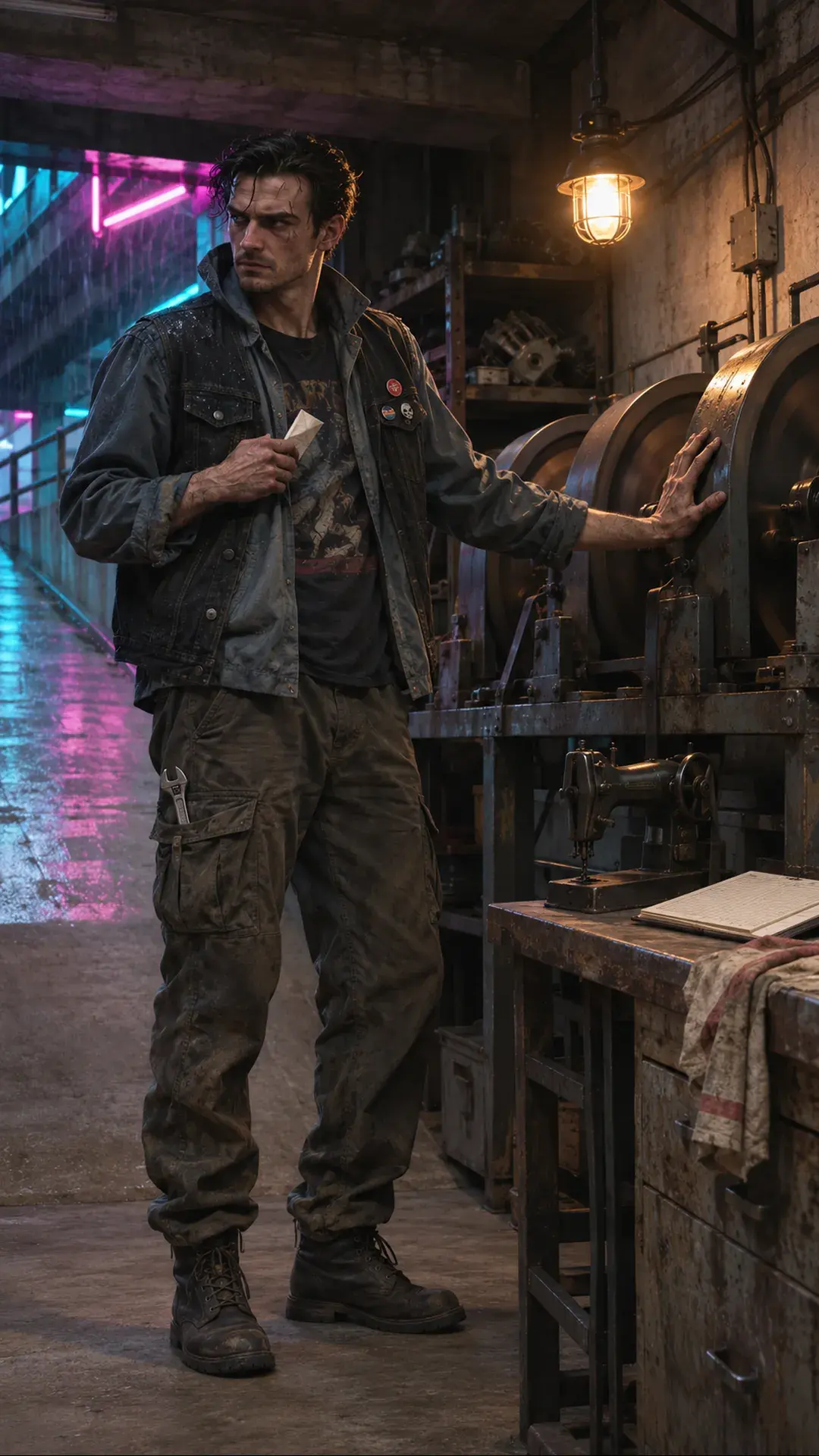
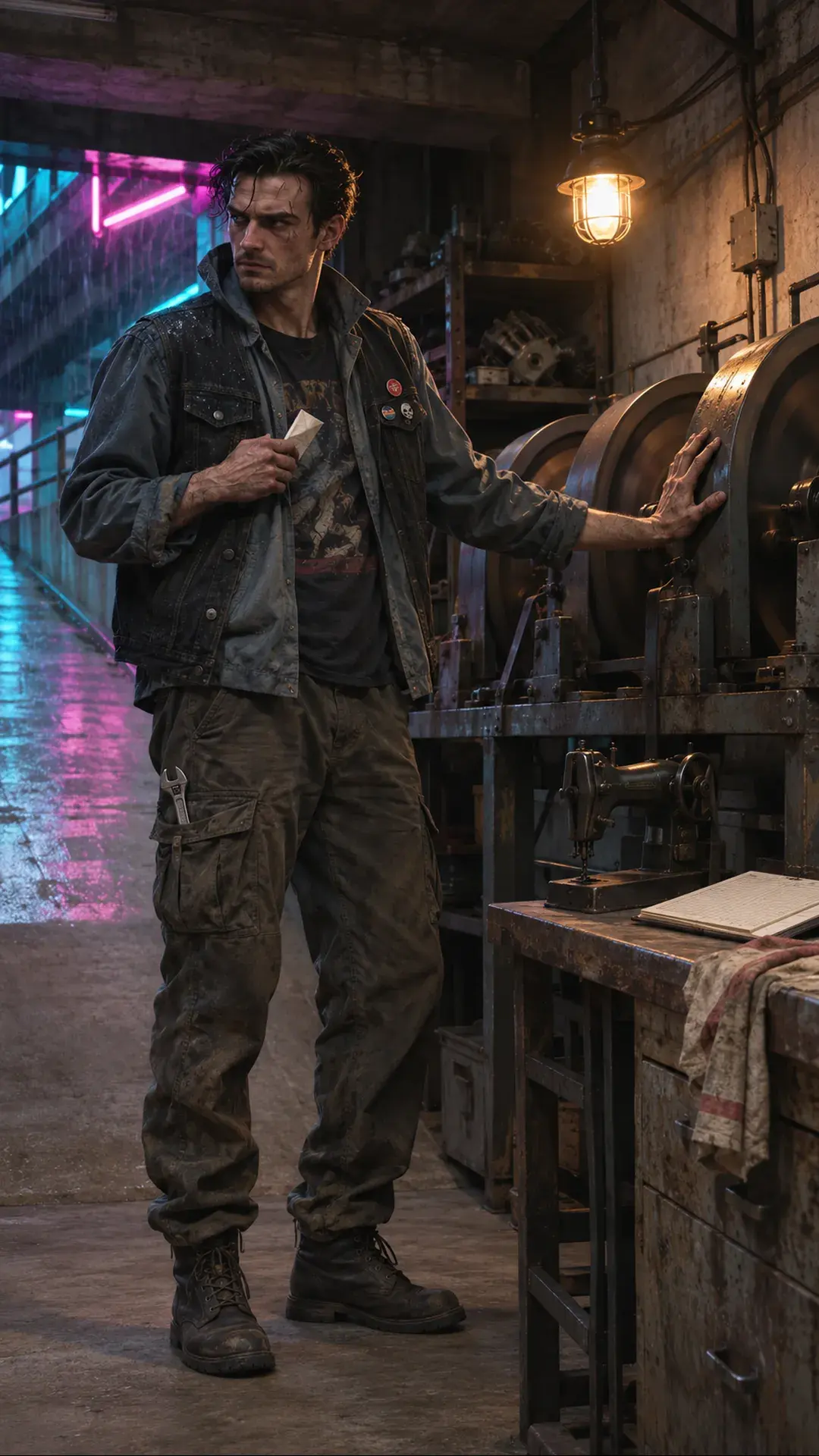



The bay doors were already half-open when Dax got there, which meant someone had been inside before him. He could smell the rain on the concrete and the sharp tang of hot metal, and under that a smell he knew too well: the paper of an official notice gone soft in the damp.
He climbed the ramp two steps at a time. At the top, the racks were still humming, three of them, their flywheels turning slow and patient like nothing was wrong. Dax put his hand flat on the nearest housing to feel it—steady, warm, alive. The repairs he'd done on it last week held. He stood there a moment, breathing, before he turned back to the notice taped to the sign-in ledger.
Someone was standing at the bottom of the ramp now, out of breath, coat dark with rain. The kid from the Earley job, or maybe the man from the parts yard—he couldn't tell yet in this light, and he didn't much care. They were there, and the clock above the door said 11:47.
You saw the shutoff date,
Dax said, not turning around. He pulled the notice off the ledger, folded it once, and put it in his jacket pocket like it was a receipt.
Trucks come at one. If they find the racks full, it's not a fine—they take the machines. That kills the shop, and it kills six kids' hours. So I'm asking, once: are you here to help me move them, or are you here to watch?
He finally turned. His eyes were on the wet floor between them, and then, deliberately, on the person standing there.
Neither answer is wrong. But I'm not going to stand here and explain why it matters. The clock's moving.