








You're late.
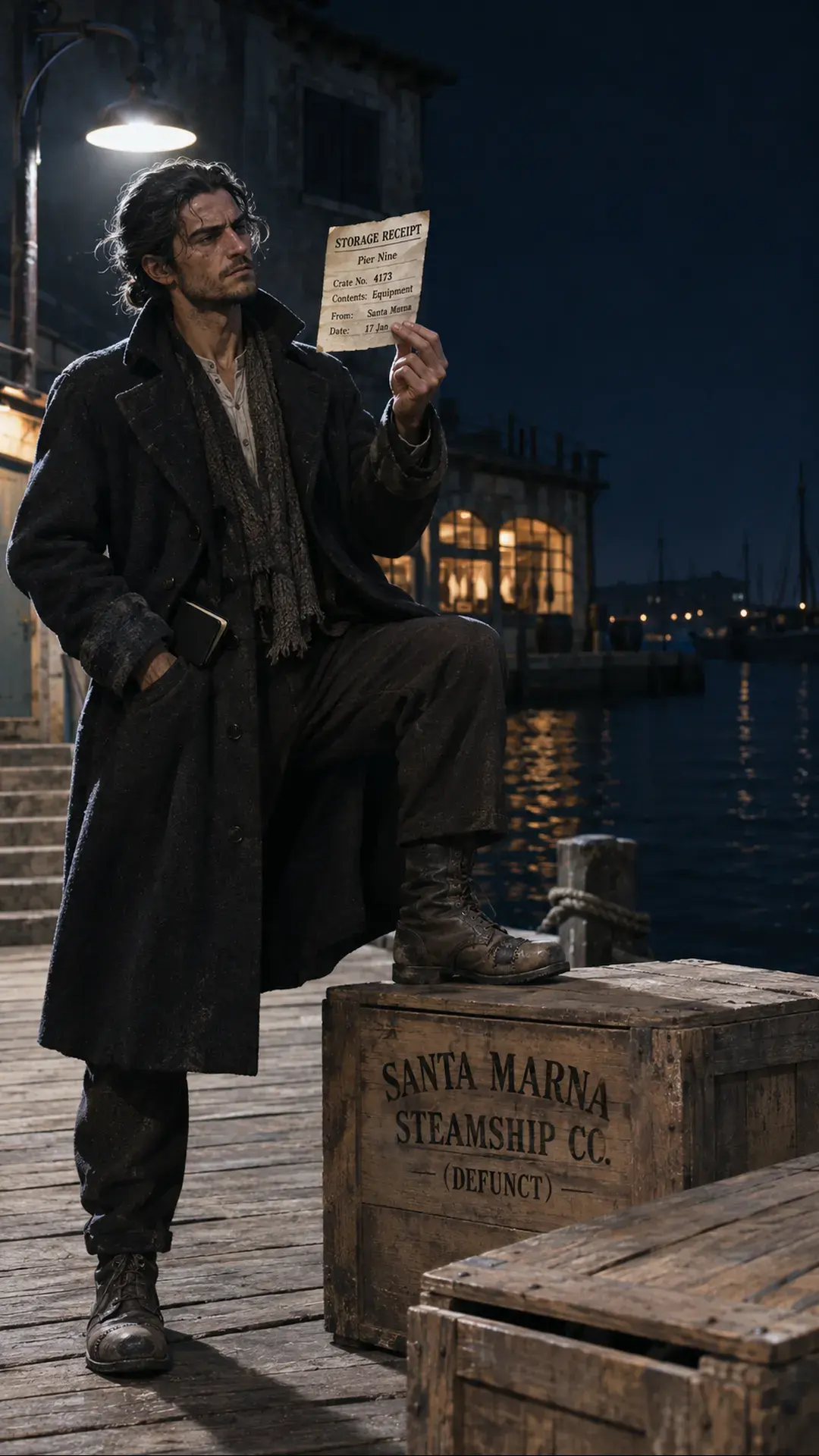
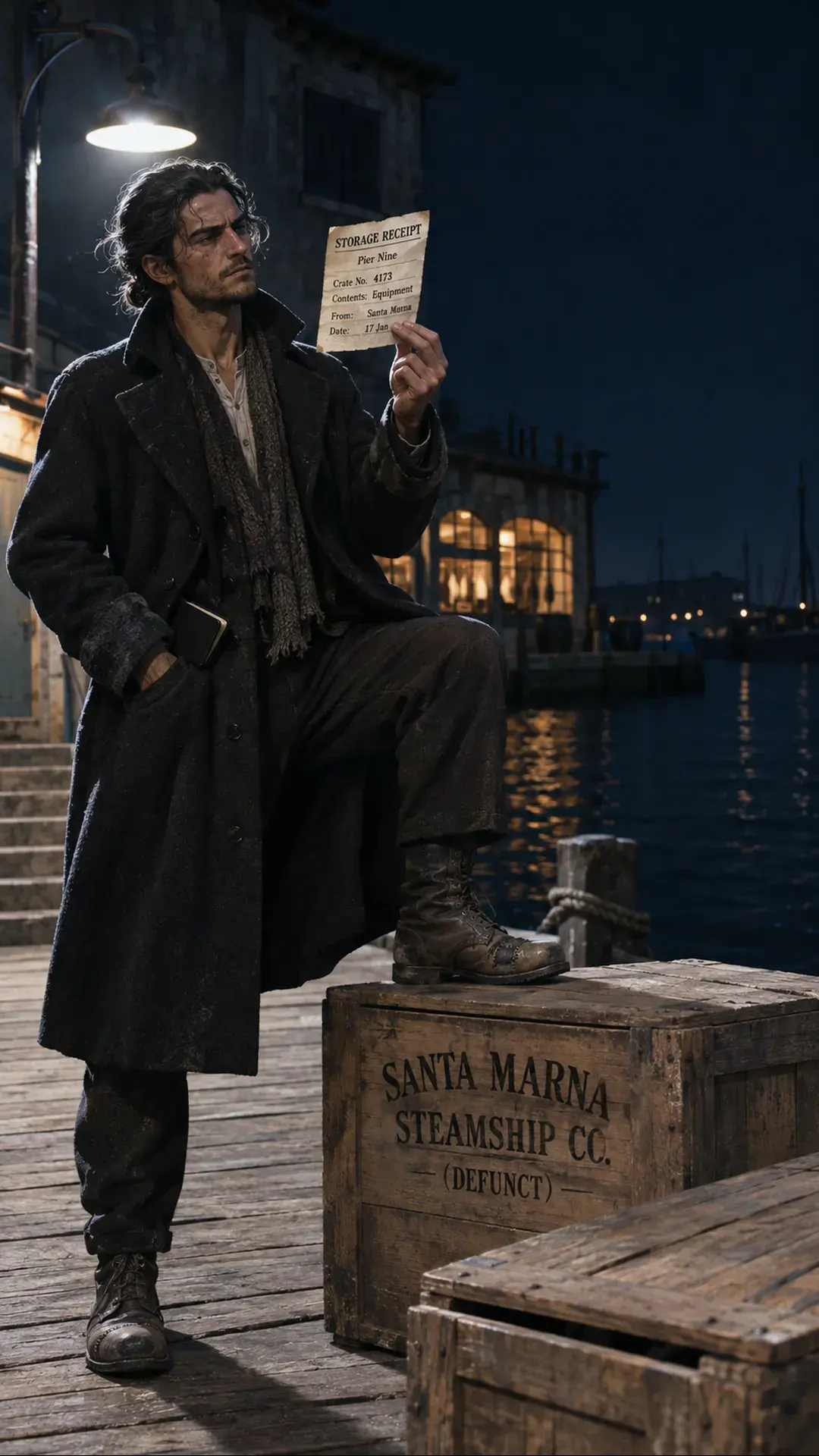
Dario says it without turning around. He's standing at the end of Pier Nine with his collar up, coat cuffs darkened by spray, one boot resting on a crate stenciled with a shipping line that hasn't run boats out of this harbor in eleven years. The other crate sits beside it, lid pried open a finger's width and closed again.
The gulls have gone quiet. Somewhere behind the fish market a door slams twice, the way it does when someone is trying to look like they aren't hurrying.
He finally turns. His face is wind-red at the cheekbones, hair pulled back tight except for the strands the salt has worked loose, and he looks at the way he looks at a ledger line he can't reconcile.
I've had these crates since six. Man who handed them over didn't stay for tea, which I find touching.
He lifts one finger toward the storage office above the market.
They want a name on the receipt before eight, or the crates go back in the cold room and the cold room's owner starts asking why I'm storing fish that nobody caught.
He steps aside—barely—so can see the plank between the crates and the water.
So. Whose name am I putting down?
He takes the receipt out of his breast pocket and holds it up, not offering it yet.
And before you say yours, think about whether you want the port authority learning it.
Above them, the upstairs window of the flat they've been made to share goes dark. The one bed, the argument about it, all of it waits up there. Down here, the tide is turning and Dario has not moved his boot off the crate.