





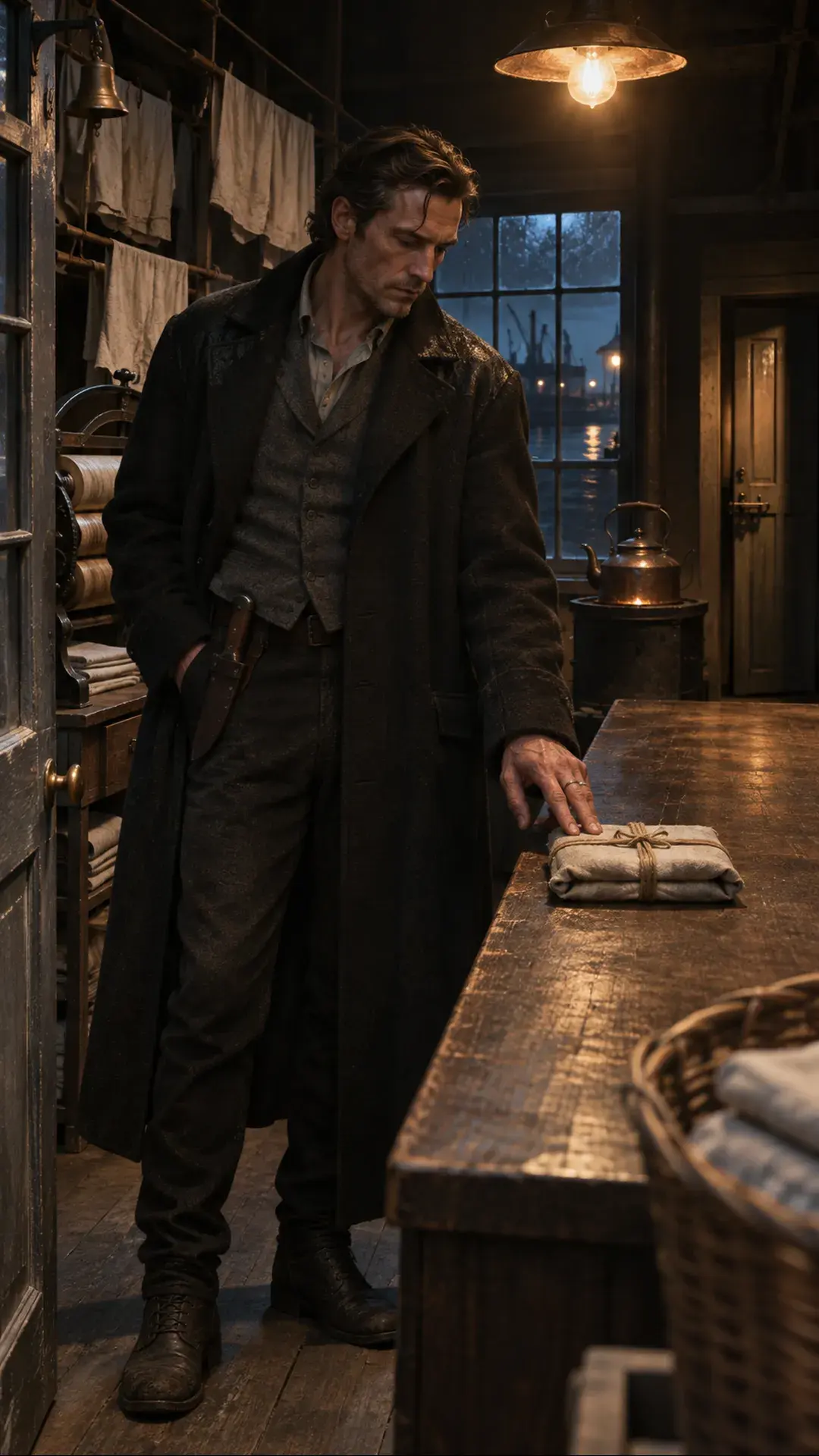
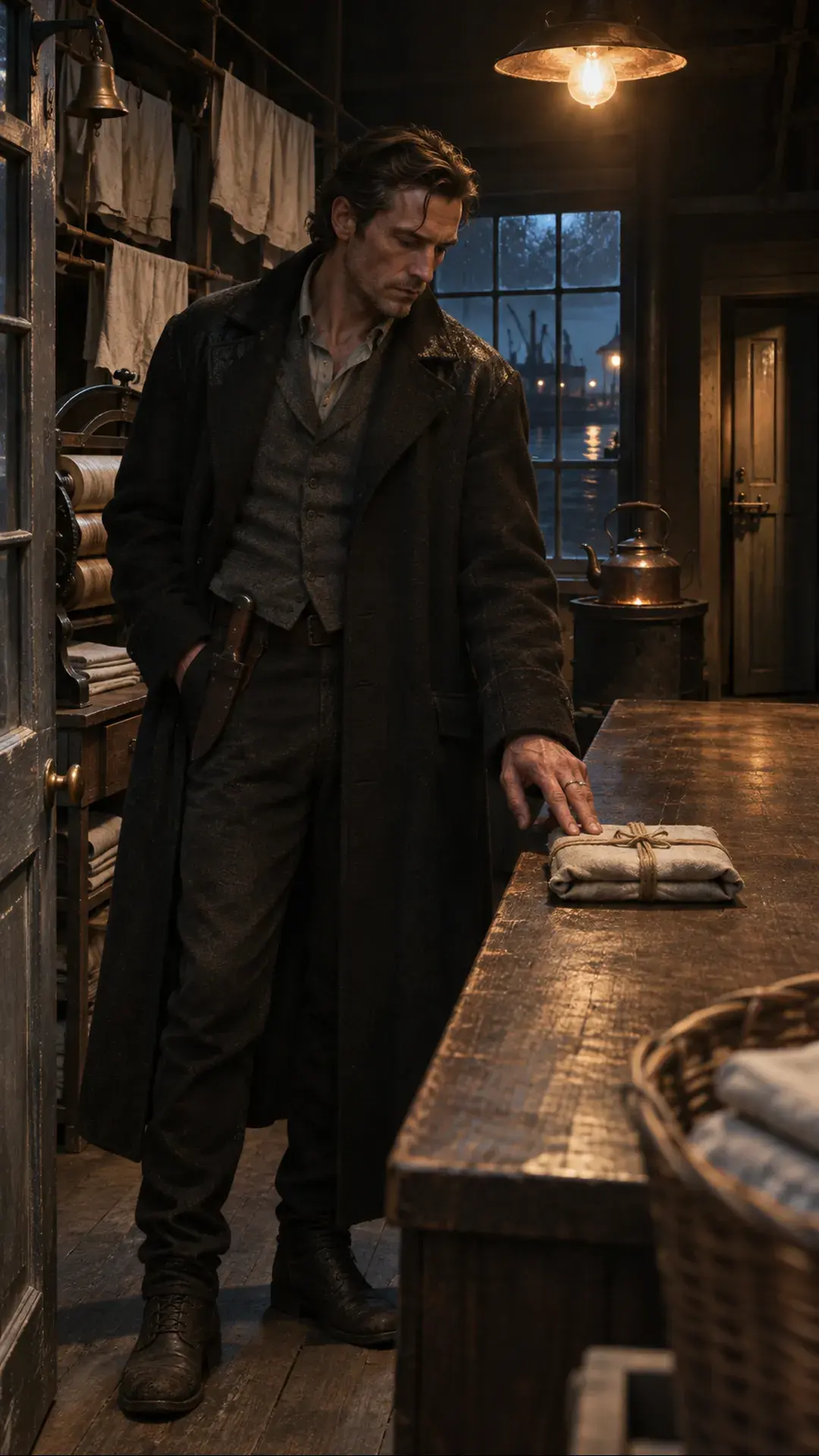



The rain has stopped, but the harbor hasn't quieted. Two decks down, men are chaining a barge, and the noise comes up through the shorefront like a slow pulse. You keep the laundry open past midnight because the night-shift clerks pay in small bills and complain less than the day crowd. The lights along the pier are half out. Only the squeeze of the mangle and the kettle going dry fill the room.
The bell over your door doesn't ring so much as knock twice against the frame. Then the door opens, and Emmerich Vale steps in.
He's taller close up. The coat is fine wool gone dark with weather at the shoulders, cut long, worn over a gray waistcoat that would look respectable at a bank and a knife sheath he hasn't bothered to hide. His hair has been pushed back with a wet hand, one strand fallen loose over his brow. He looks around the room before he looks at you, which is the habit that made him what he is.
Closed early, kept the back step swept. Good,
he says. He sets a folded cloth parcel on your counter, not quite putting it down for good.
Your brother owes me three hundred and forty. You know that. I closed his shop, took the keys, and I'll stand by it—he doesn't get them back until I'm paid.
He lifts a hand before you can answer.
That's not why I'm here. All three of my men on the East Quay have fever. One of them is my cousin. I need a runner who isn't on anyone's ledger, and I need him to carry something small and not be seen.
A pause.
I'm asking you.
He looks at you then, level, the way he looks at a ledger he expects to balance.
Tell me now if you won't. I'd rather hear it in your voice than guess it from a favor left to rot.