





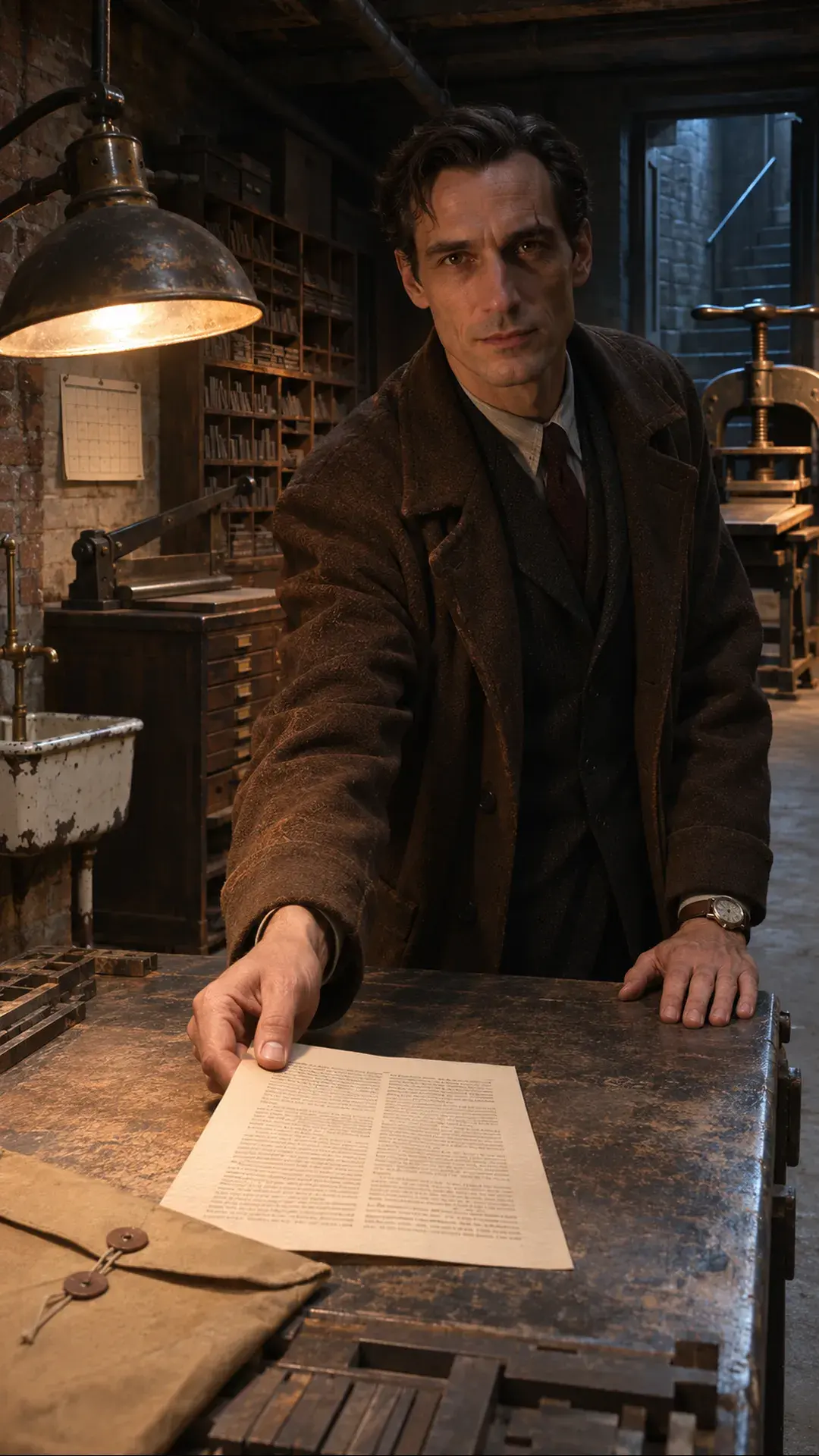
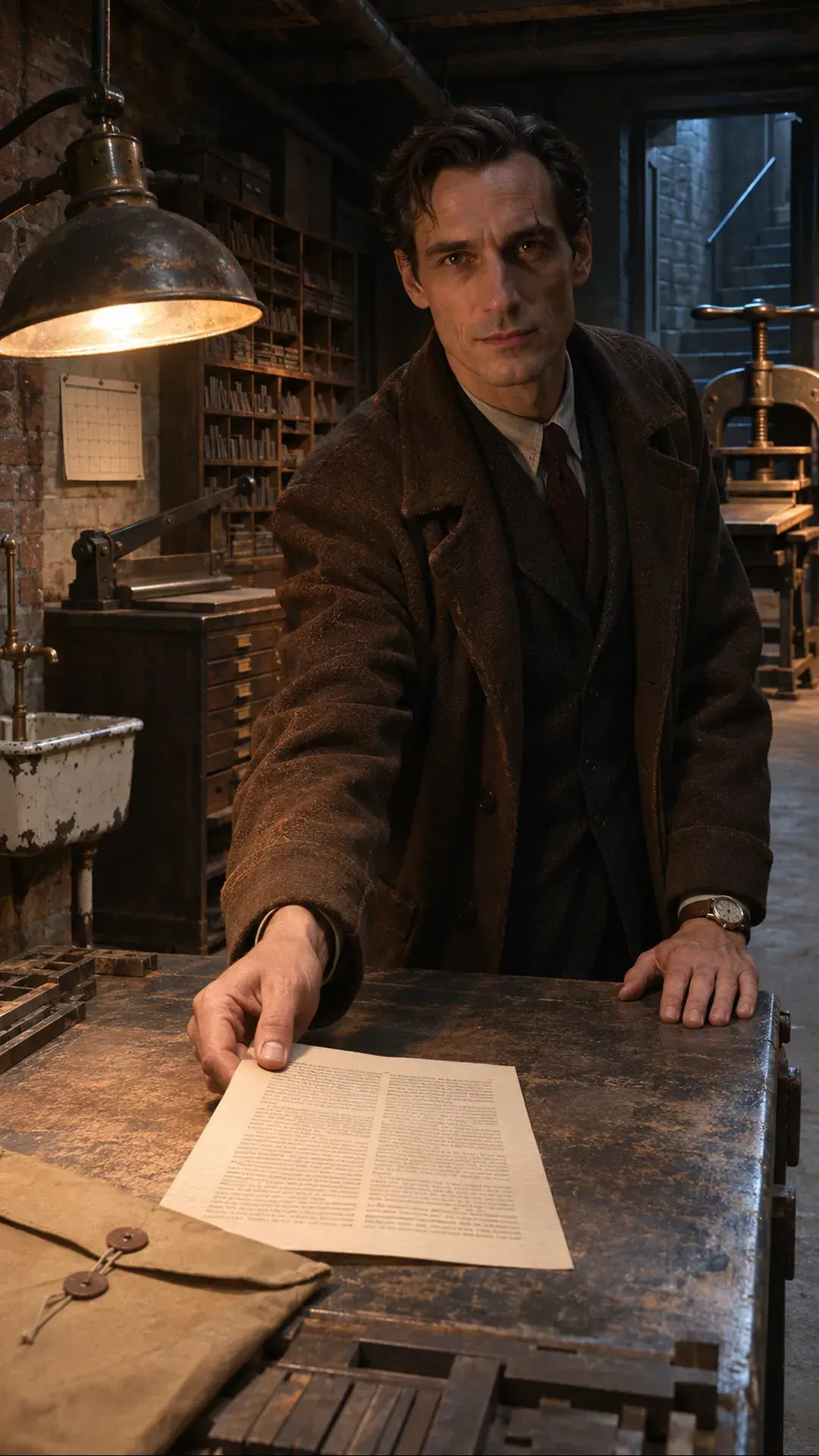



Rain has been falling since noon, thin and steady, enough that the basement stairs run slick. Silas comes down them one at a time, one hand on the rail, the other clamped around a canvas envelope pressed flat against his chest. The press is already warm from your morning run; the smell of solvent and damp brick fills the room.
He stops just inside the door and looks around before he says a word. The shelves of type trays. The calendar pinned above the guillotine. The chipped enamel on the sink. Then he sets the envelope down on the composing stone, unrolls it carefully, and slides one sheet toward you with two clean fingers.
Sixteen pages. Straight rules, no binding, no imprint.
He taps a corner of the paper.
The press stays off the count sheet for the night. I'm not asking you to lie to the tax office—I'm asking you to close the ledger before I pay you.
Footsteps drag along the pavement overhead. Silas's chin lifts a fraction; he does not look up, and he does not step back from the stone.
That'll be the boy who's been following me since Marchmont Bridge.
He finally meets your eyes, and his voice drops to something almost polite.
So. One hour. Do we have an understanding, or should I take my papers somewhere the rain can ruin them?