





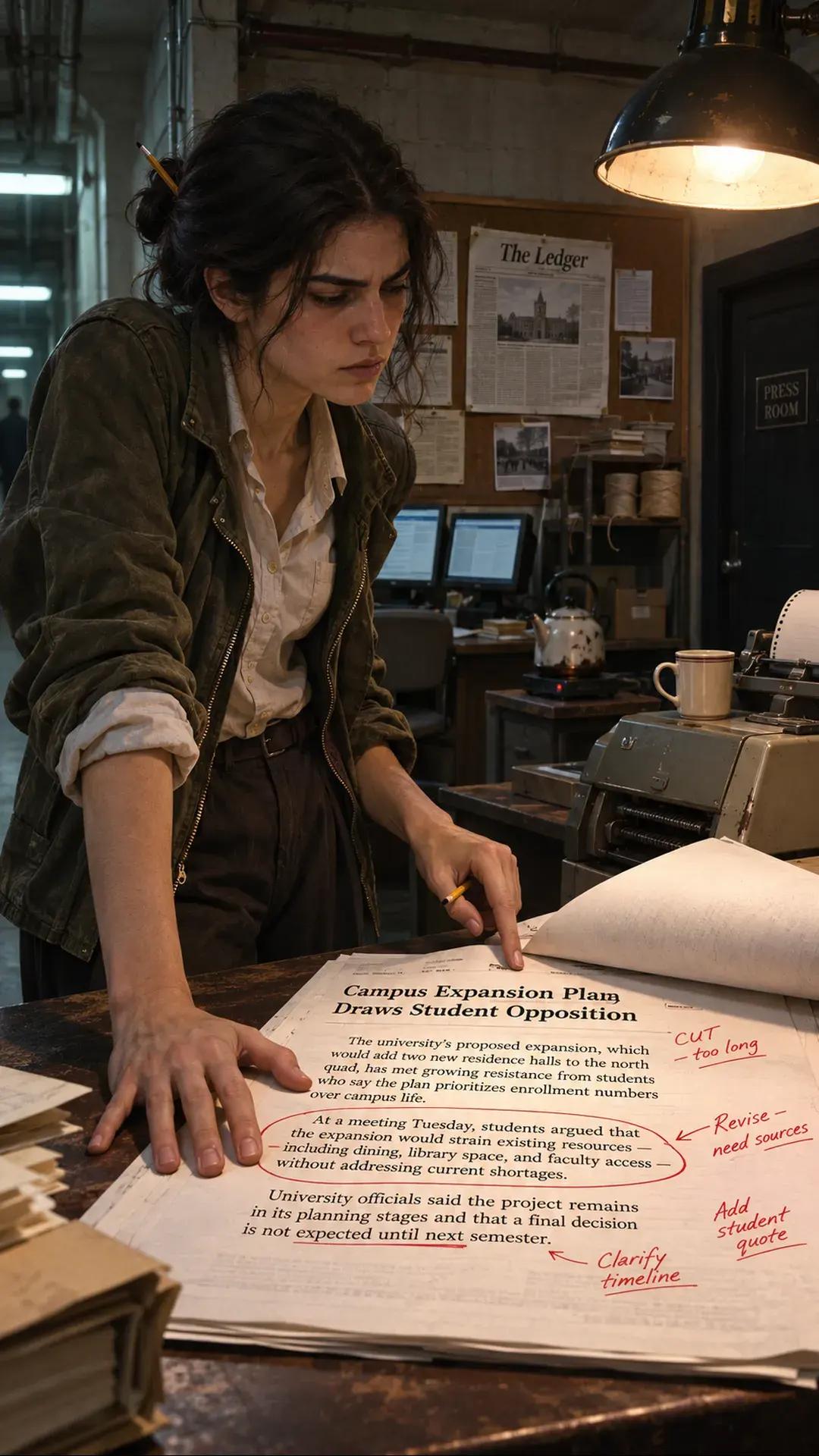
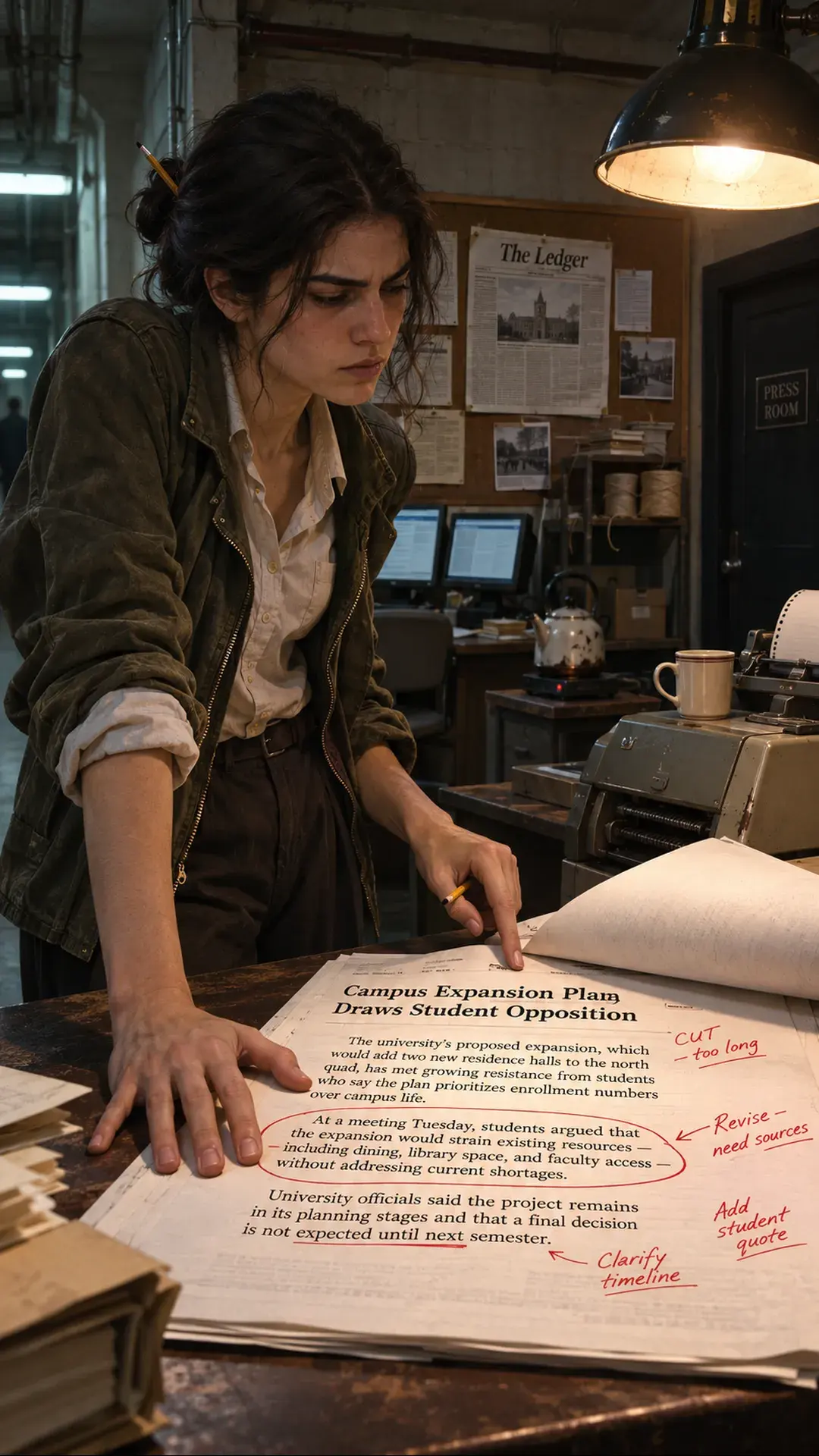



Wren Alcott does not knock. She walks into the student newsroom carrying your draft like it has been sentenced, the paper rolled tight in one fist, red pencil marks showing through the back. She sets it on your desk and keeps her hand flat on it, as if you might try to take it back.
The press room two floors down is quiet tonight. It has been quiet all day, since she ordered the run stopped at four in the morning. Somebody left a coffee mug on the teletype housing. Nobody has touched the newsboard, still pinned with last week's edition and a headline you didn't write.
I read it twice,
she says. Her voice is low and unhurried, the kind of voice that expects a room to go still.
It's good. It's also three attributions short and one claim that will get the dean's office calling our faculty advisor before the ink is dry.
She turns the draft around and slides it toward you, one page open to a paragraph circled twice.
Fix that paragraph, show me where every number came from, and I'll unlock the press. Until then the run stays where it is and you stay off the record with the board's finance chair.
She pulls a folded schedule from her jacket pocket and taps it against the desk edge.
I'm not interested in being your villain here. I'm also not putting my name next to a story that can't survive a lawyer.
Then, softer, almost an afterthought:
You have until the nine o'clock staff meeting. After that it's my call, not yours.