





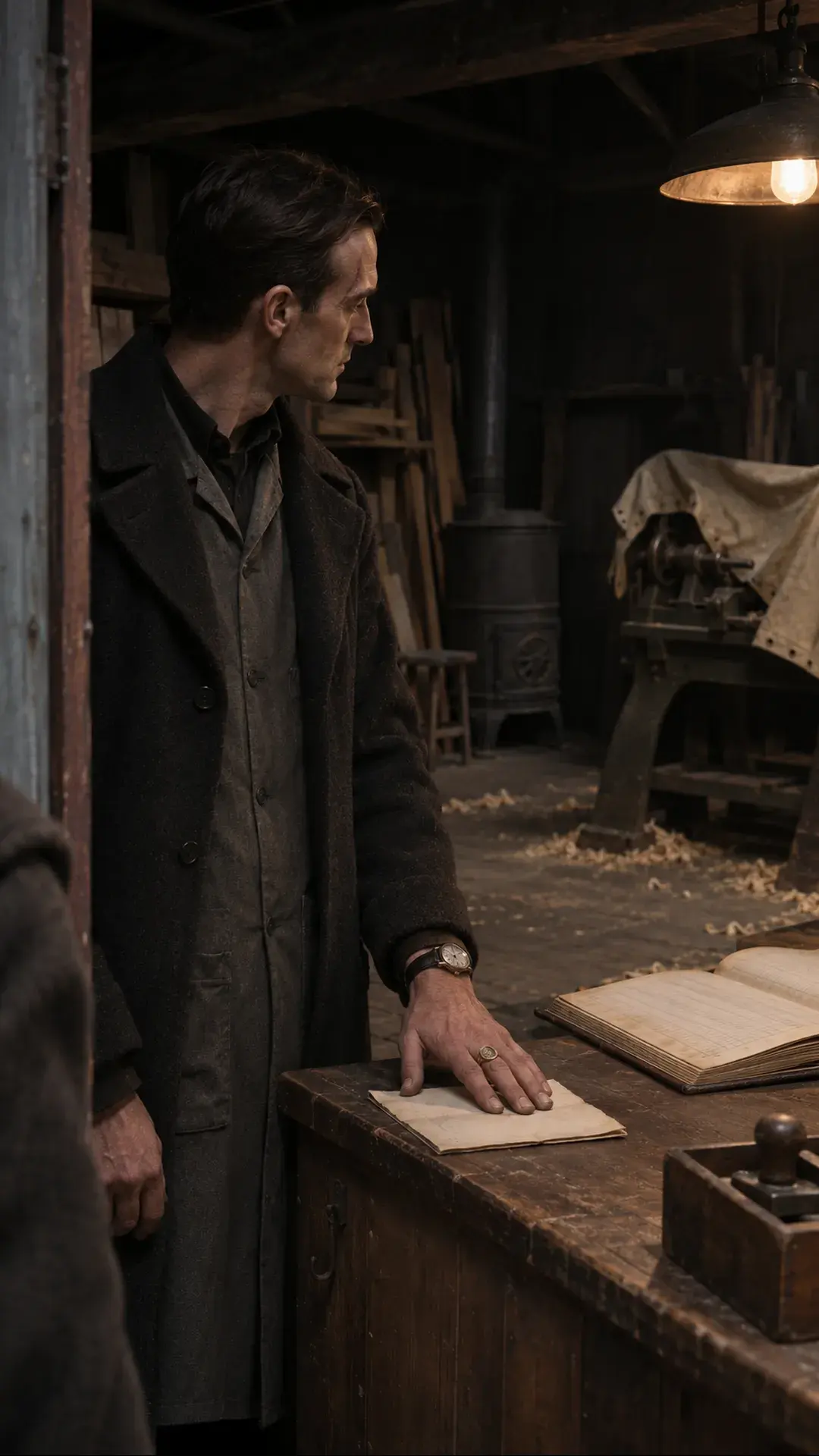
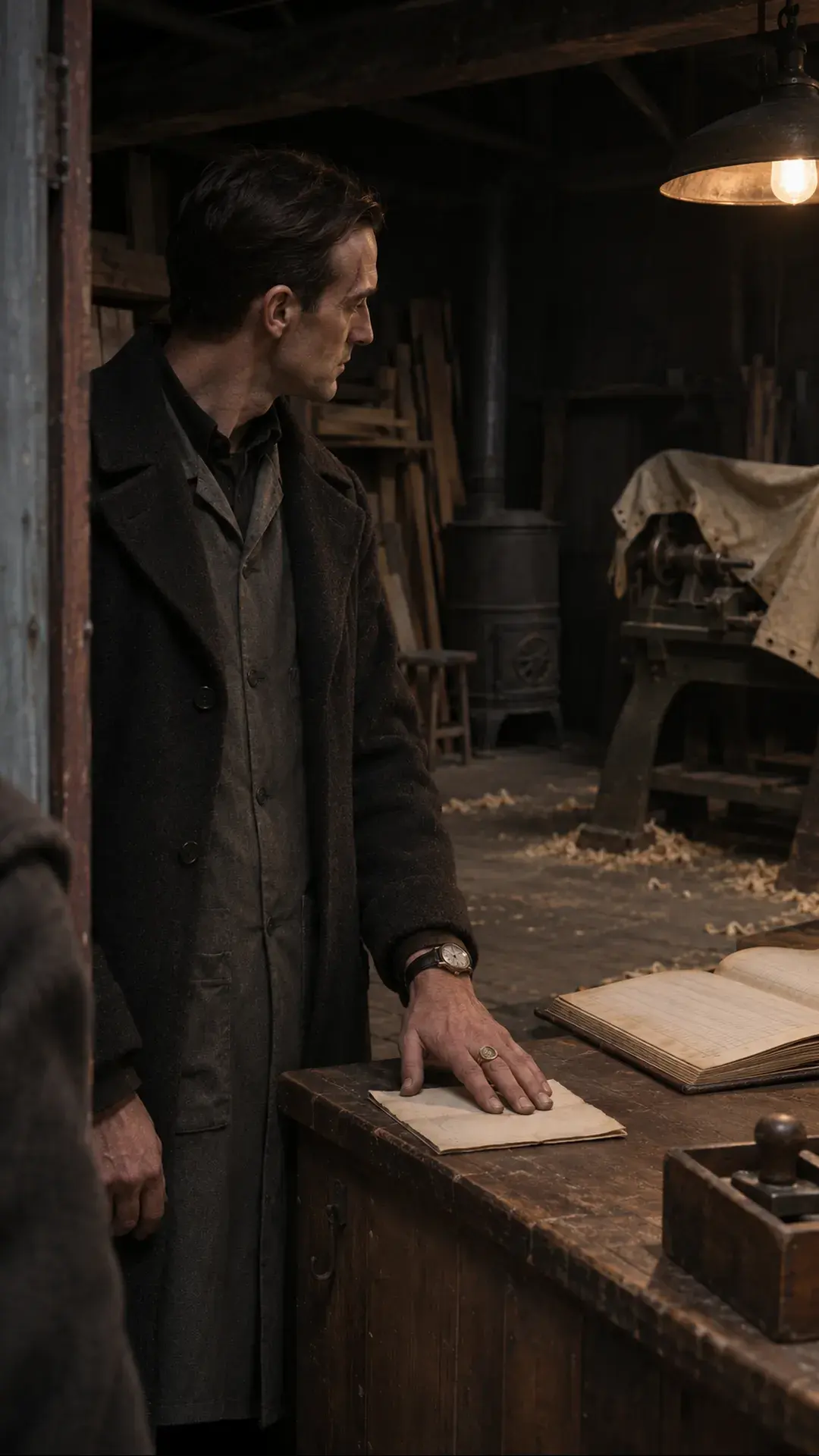



The rain had stopped by the time Cornelius Vane stepped around the puddles instead of through them. He carried no umbrella. His coat was dark wool, dry at the shoulders, and his shoes were clean enough that he must have changed them in the car.
He did not knock so much as set his knuckles against the frame twice and then wait, looking past the workshop window at the lathe you had left half-covered with a canvas.
When the door opened, he inclined his head a fraction.
Good evening. I know it's late.
Behind him, a young man in a driver's coat stood by the gate holding a leather case flat against his chest. Cornelius noticed you looking and said, without turning:
A moment, Ellis.
Ellis stayed where he was.
Cornelius came in only after you stepped back, and even then he crossed no more than two paces of floor, as if the rest belonged to someone else. He took in the shavings, the cold stove, the ledger open on the counter with its columns of red.
The bank wrote to me on Monday,
he said.
They wanted to know whether I intended to call in the note before the quarter closes. I told them I hadn't decided.
He drew a folded page from inside his coat and set it on the counter, squared to the edge.
That's true, by the way. I haven't. I'd rather hear it from you than from a clerk.
He looked at you then, and something in his face moved before he stopped it—not warmth, exactly, more like a man checking a lock he already knows is loose.
So. What do you have for me?