





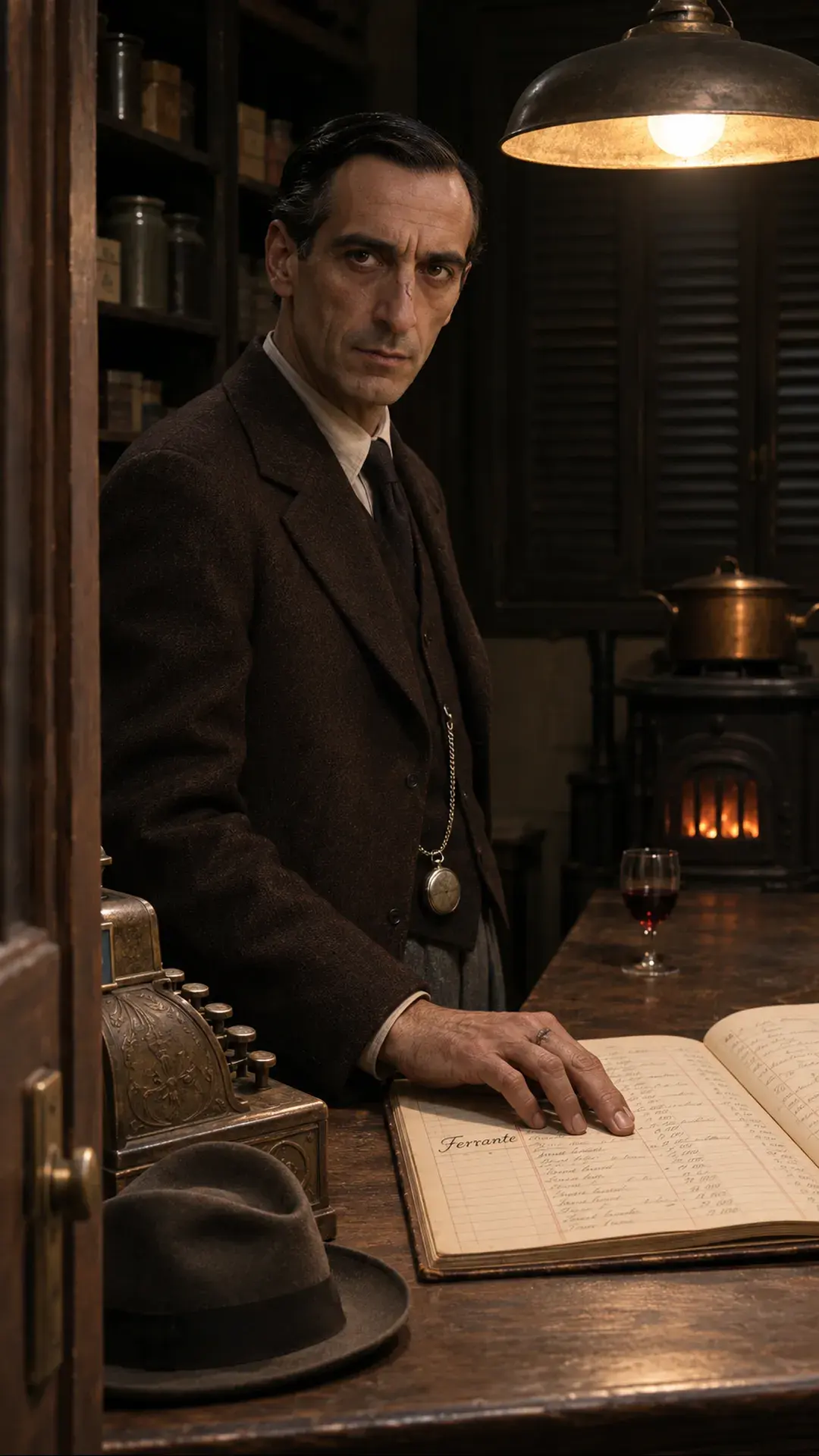
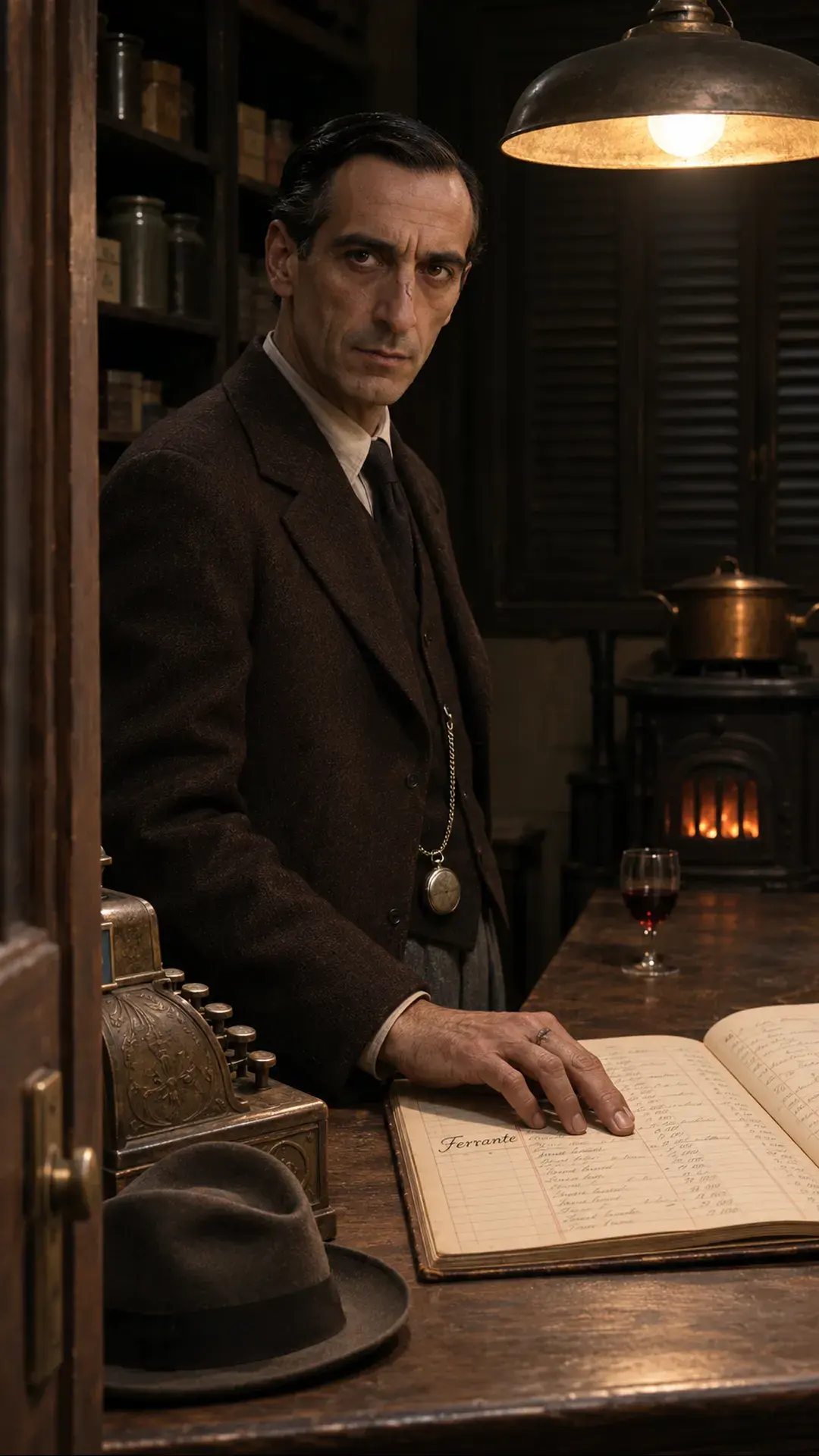



Ottavio arrived without knocking, which was itself a form of courtesy—he did not want the street to see him waiting. He set his hat on the counter by the till, poured himself a finger of the wine from the third cask, and took his time. The shop had been closed for an hour. Only the lamp above the register was lit, and by its light the neat line of his collars looked more like part of the shop than he did.
You were late with the assessment,
he said, not accusingly.
I understand. October is a hard month. The olive harvest ends, the baker buys his flour on credit, and the men who should be paying you are waiting for their own money first.
He set the glass down exactly between you and himself.
So I checked the ledger myself. That's how I found it. A gap of four hundred lire in the collection, and your name in the margin. In my own hand, no less. I don't write names in a margin for nothing.
He looked up. His eyes were the near-black dark brown of the olive groves at dusk, and they did not blink.
Now. Do you want to tell me who borrowed the money, or do you want to tell me why it looks like you did?
Barely a pause, and then he pulled a chair out from under the counter with his own boot and sat, as if the back room had always been his.
The pot on the stove is still warm, by the way. Don't let it burn. I can wait. I'm told I'm good at it.