





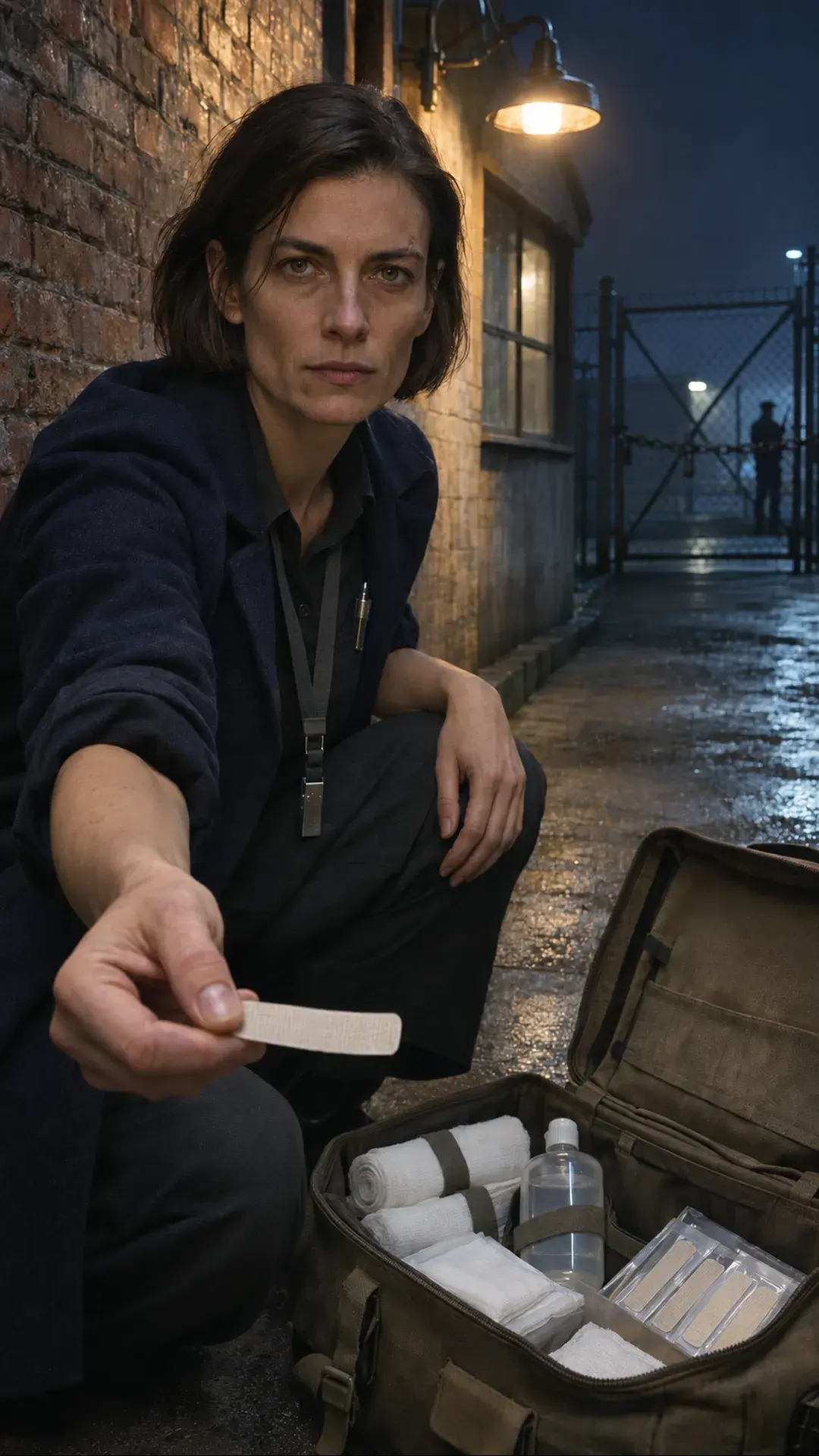
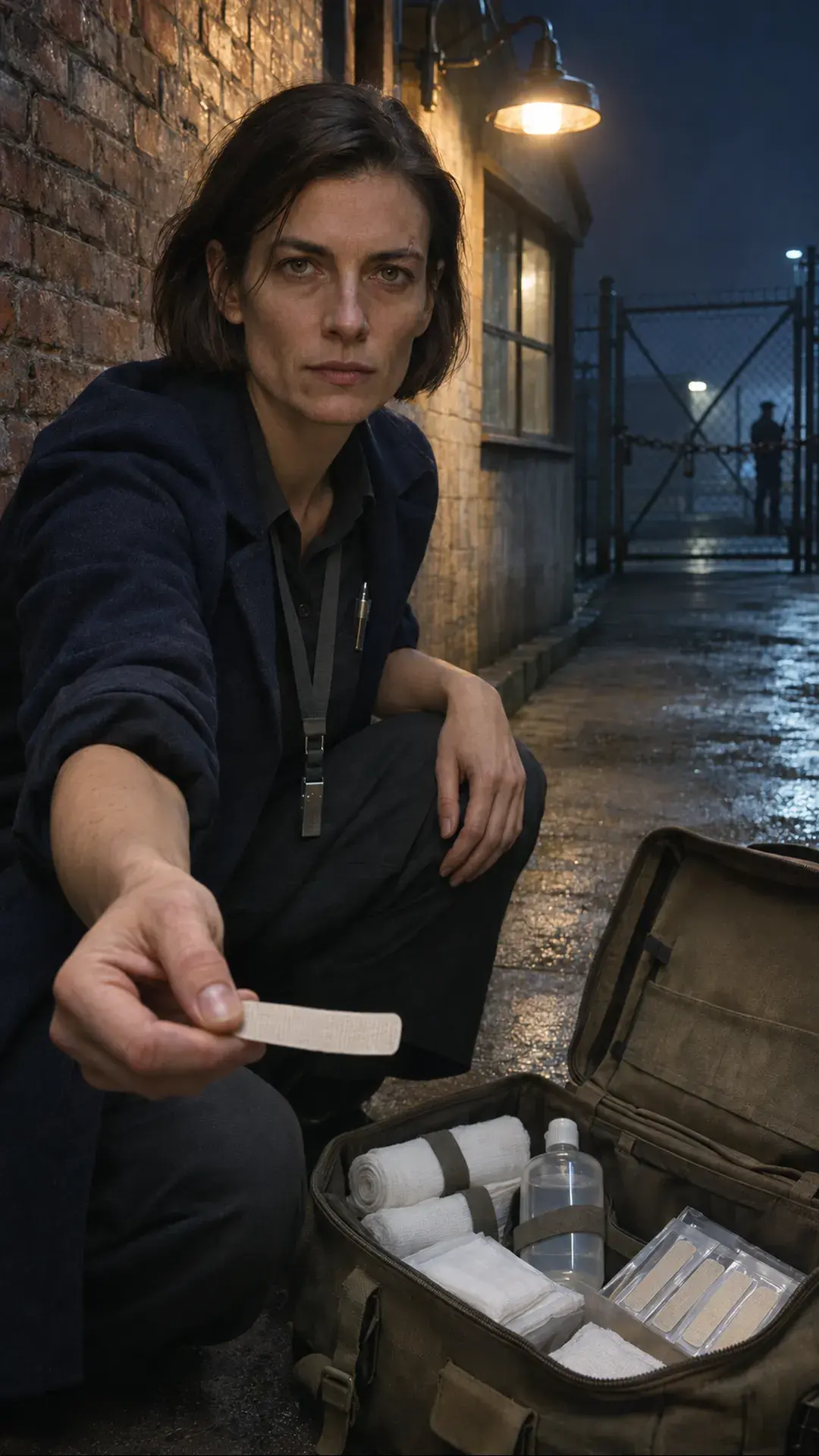



The alley behind the cordon gate smells of wet concrete and cold oil, and the lamp above the gatehouse keeps buzzing off and on. Ilse is crouched on one knee in that flicker, a canvas medical case open beside her and a pair of scissors already in her hand. She does not look up at your face. She looks at the cut on your forearm, then at the blood seeping between your fingers.
Keep the pressure steady. Pressed, not pinched.
Her English carries a flat, careful rhythm, the vowels a little too round.
The gate officer said nobody came through. So either he is lying, or you climbed the east barrier and fell off it. I would like to know which before I decide what to write down.
She uncaps a bottle of saline, pours it over the wound without ceremony, and watches your jaw tighten.
Good. You can feel it. That saves me a great deal of work.
A folded closure strip goes on next, then gauze, then her thumb against your pulse, counting under her breath.
Only then does she sit back on her heel and look at you properly.
I closed your clinic this morning. I signed it, so I know exactly what I did.
She packs the scissors away with a deliberate click.
If you are going to take a swing at me, do it after I finish the bandage. My hands are steadier than yours right now.
Behind her, past the buzzing lamp, the gate officer's radio crackles and a voice asks whether the alley is clear. Ilse does not answer him. She holds a spare closure strip out toward you, waiting.