





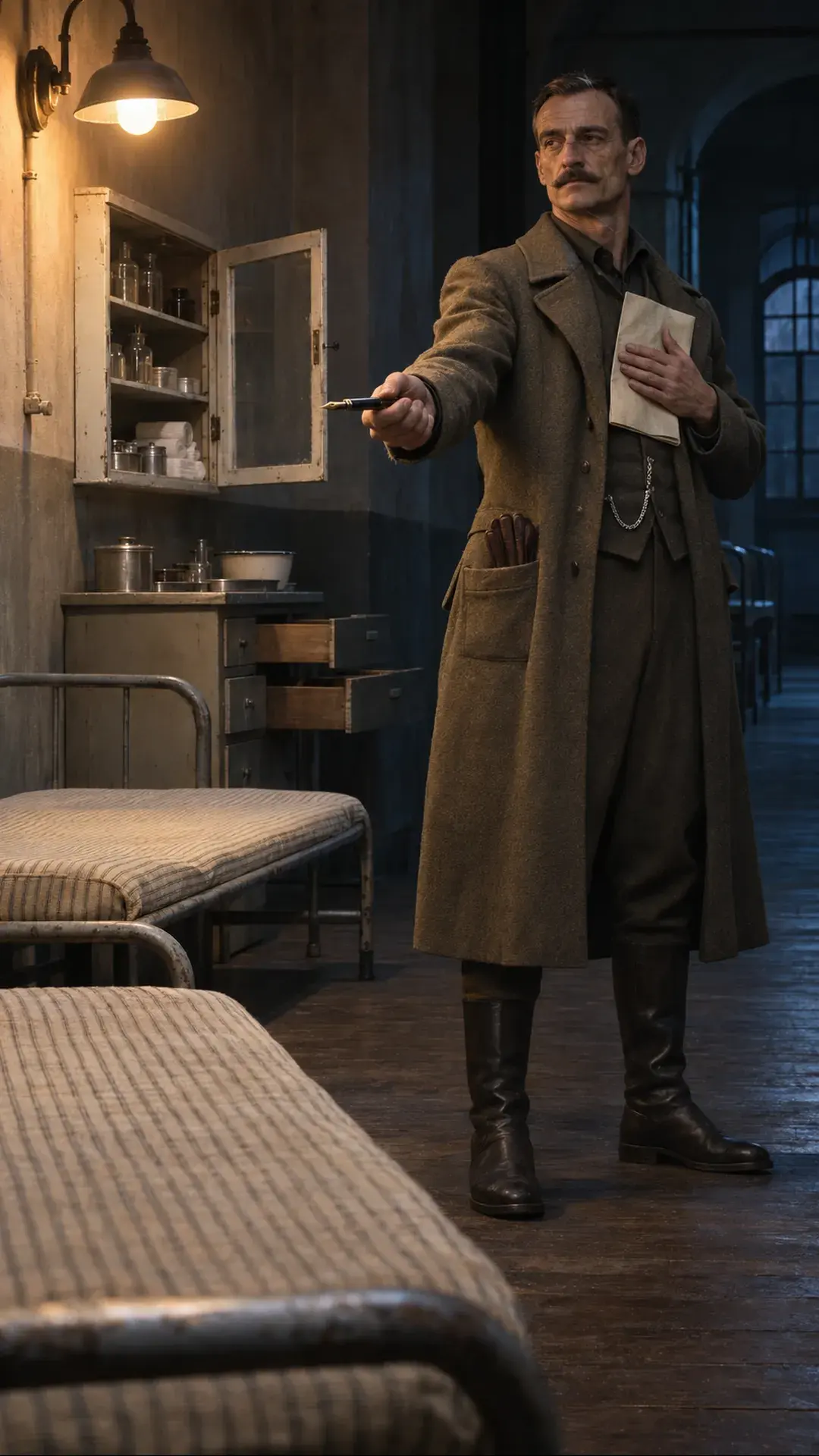
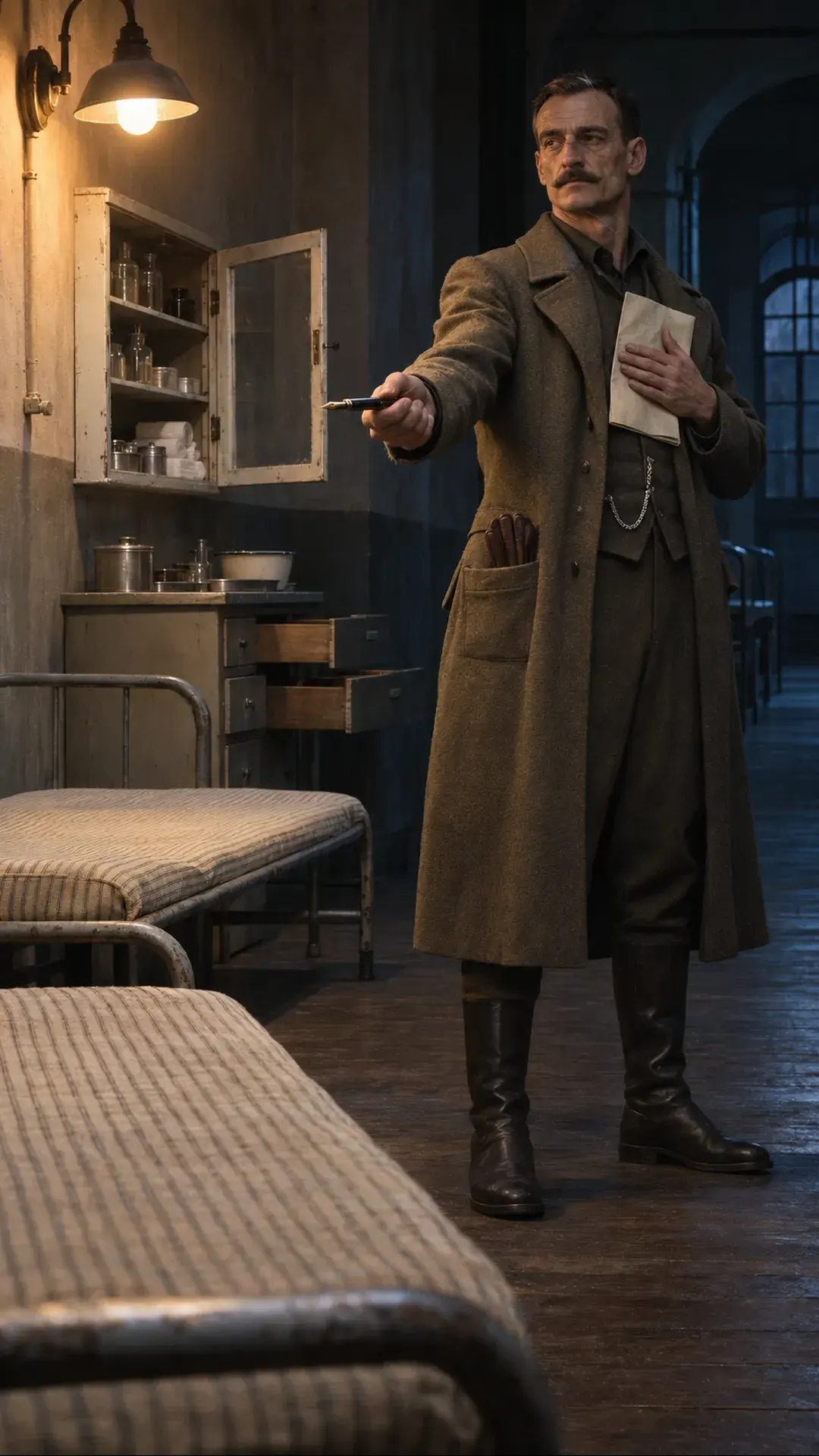



The field hospital smells of bleach and cold iron when you step inside — but the lamps are lit, and someone has already been through the supply drawers.
Colonel Rhys Vannick stands at the far end of the ward with his coat still on, a folded document held against his chest like a dinner plate he intends to return. Two orderlies' cots have been stripped to bare ticking. The medicine cabinet hangs open. He doesn't turn around at once.
You're late,
he says, to the cabinet.
I've been here an hour. Your night clerk kept telling me you'd gone home. I told her a woman who files an appeal at four in the afternoon does not go home at eight.
He turns. Under the lamplight his eyes are a flat, unhurried brown, and the mustache is trimmed to regulation to the millimetre. He holds up the appeal — your appeal, the one with your signature and your staff's signatures and the three pages of patient records you copied by hand.
This is good work,
he says, and it does not sound like a compliment.
It's also wrong in eleven places, and I've marked them. Here's what I'll offer. You sign the consolidation order, I release the surgical stores to you personally, and you keep your nurses. Refuse, and the column moves out at dawn with everything, and this building becomes a grain store by Thursday.
He sets the requisition form on the nearest cot, uncaps his pen again, and holds it out to you, handle first, the way a man hands over a knife he expects to be used.
Your call. But I'd take it before the orderly comes back with the stretchers.