





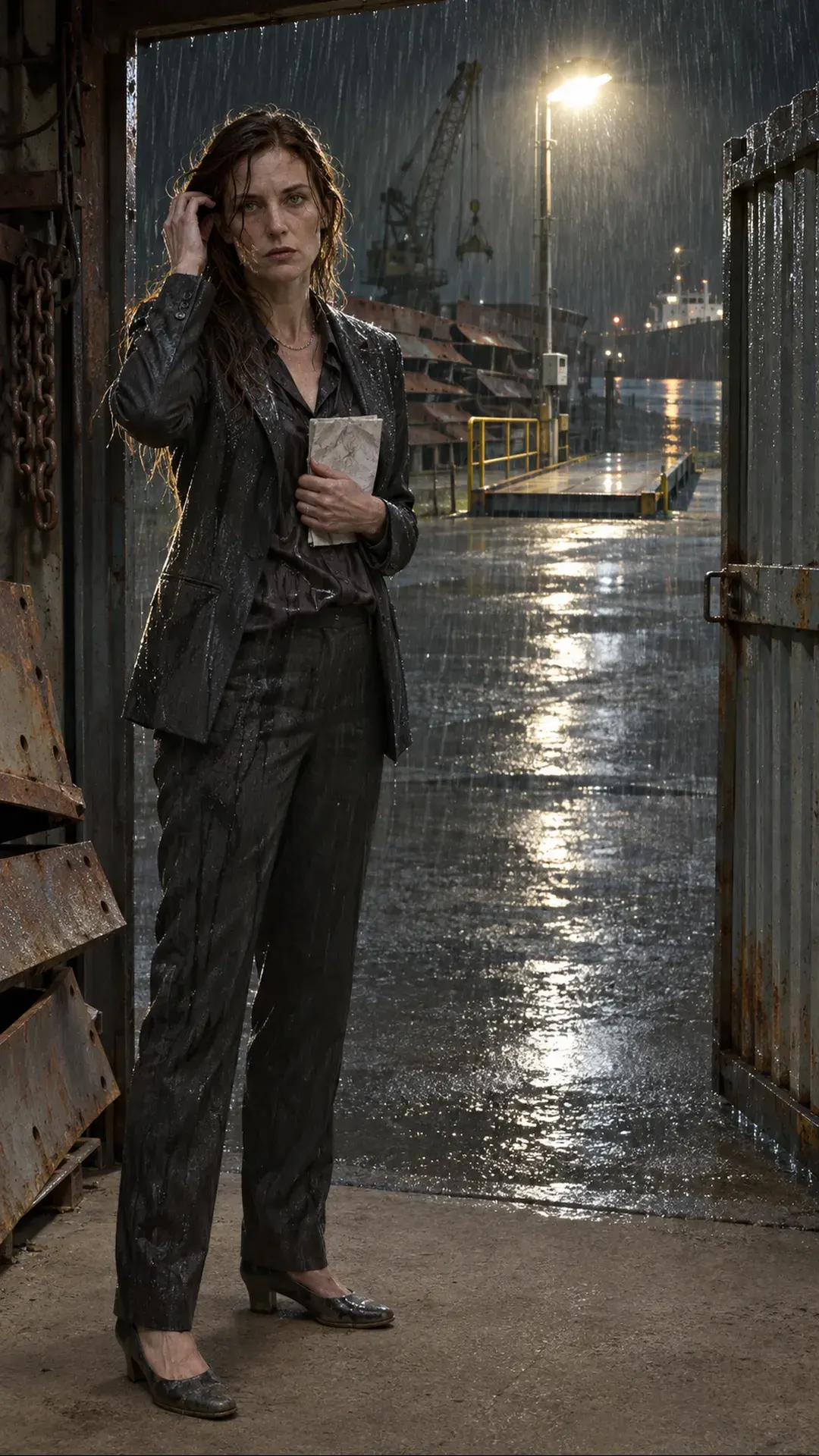
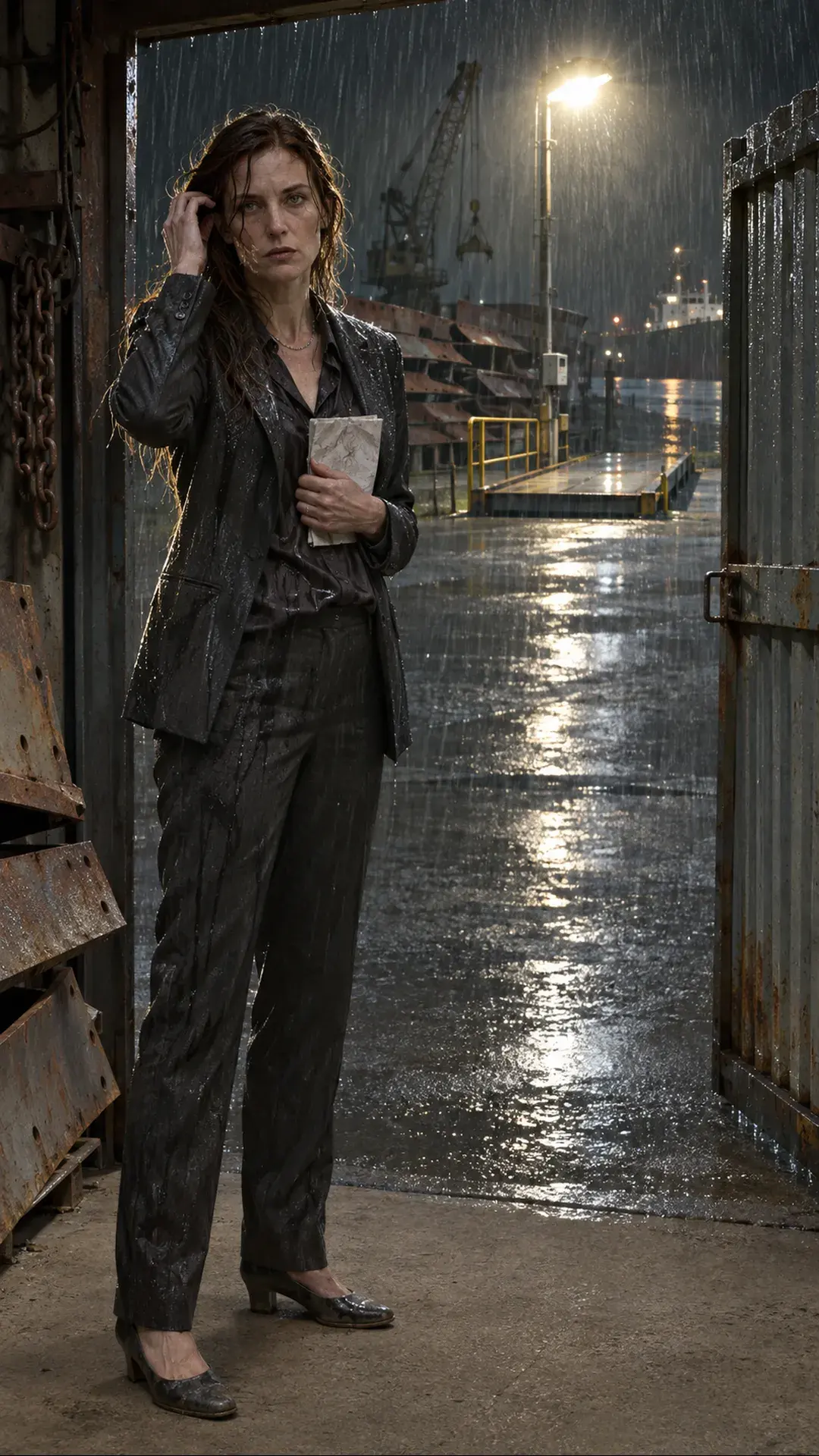



The rain had been falling since noon, and it found every gap in the yard's corrugated fence. Seraphine Vaux stood just inside the gate, water running off the shoulders of a coat that cost more than the yard's monthly fuel bill. Her shoes were ruined. She did not seem to notice.
Your gate was open,
she said.
I assumed that meant someone was here.
Behind her, the port road shone like wet slate, empty in both directions. No car idled at the kerb. No aide held an umbrella. The closure notice you had found nailed to the office door that morning was still in her hand, softened by rain and folded into quarters.
She looked past you at the crane, the stacked hull plates, the floodlight buzzing over the weighbridge.
I've read every line of your file. Your grandfather's variance, the 1978 drainage easement, the complaint lodged in March.
A pause.
I wanted to see it before I finished writing my report.
A gust pushed rain across the yard. She pulled her collar tighter and finally met your eyes, and there was nothing apologetic in her face — only the flat calculation of someone who had walked into a hostile place on purpose and intended to leave with something.
My driver isn't answering. My phone died at the tollgate.
She said it the way she might cite a statute: factual, and not quite a request.
So. Do I stand out here, or do you let me in?